Content Warning: This guide discusses pornography, sexual performance pressure, objectification within queer culture (including racialized and body-based exclusion language used on hookup apps), and the intersection of sex and substance use. If you're in a fragile place with any of this, take it slow. Come back when you have space.
A Note From Dallas
Hey,
I want to start with something honest. When I first became meth-free, I was convinced I had broken something inside me. Sex without Tina felt flat. It felt awkward. It felt like I was missing a part I couldn't name, and I was certain — certain — that I had ruined my ability to connect that way ever again.
I was wrong. But not in the way you might think.
I hadn't broken anything. What I'd done was spend years measuring myself against a definition of sex that was never real to begin with. Porn wrote part of it. The apps wrote part of it. The clubs, the chems, the expectations of a community that confused intensity with intimacy — they wrote the rest. And when I got sober, that whole script came crashing down, and I called that the problem.
It wasn't the problem. It was the beginning of the truth.
This guide is for you if you're in recovery and grieving sex you think you've lost. It's also for you if you're still using and you've started hearing that small voice underneath the high — the one that says this isn't actually what I want. That voice isn't your enemy. That voice is the most honest thing about you.
Let's walk through it together.
Dallas 💚
Episode Summary
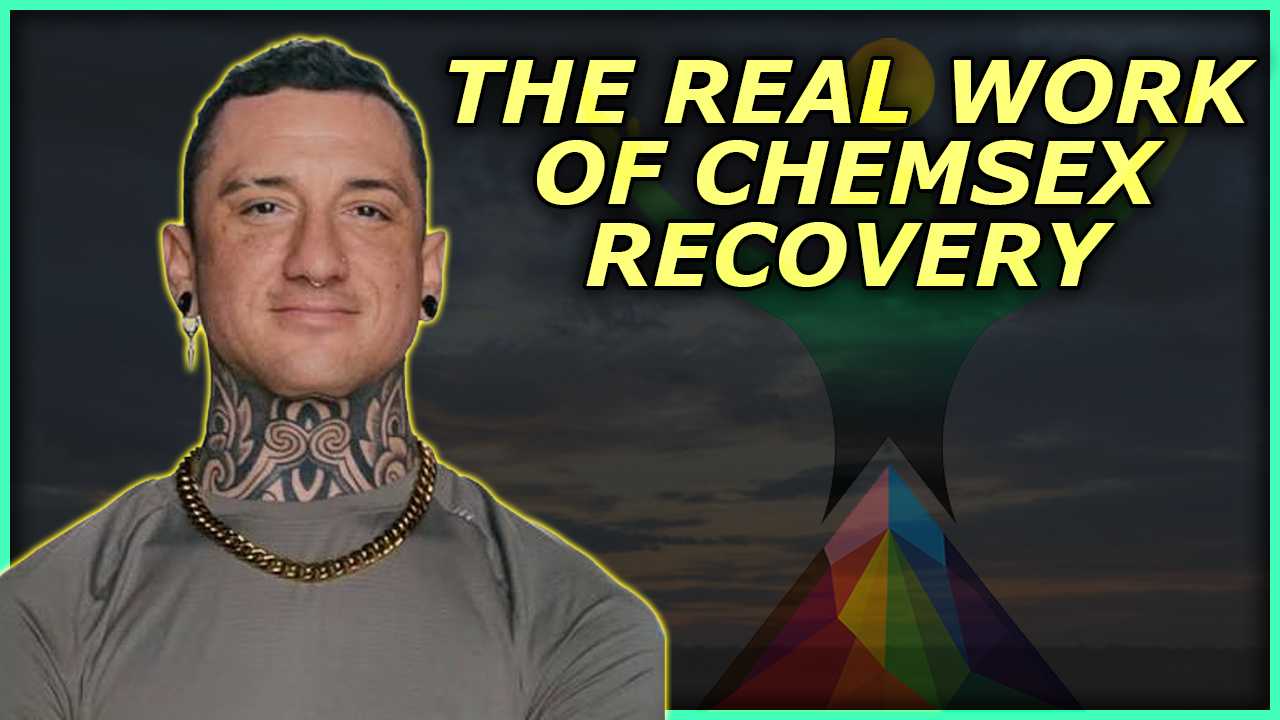
In this episode, I get direct about something I hear constantly: I can't have sex without using Tina. Underneath that statement is a belief that sober sex is somehow inferior, broken, or impossible. I push back hard on that — but not by telling you sober sex is great. I push back by questioning the ruler you've been using to measure it.
The truth is, most of what we've been taught about gay sex came from porn, from hookup apps, and from a queer culture that turned sexual liberation into sexual obligation. We learned to perform. We learned to commodify ourselves and each other. We learned to measure intimacy in duration, intensity, and conquest. And then we used substances to keep up with a script that was never sustainable in the first place.
Sober sex isn't failing you. The script is failing you. And recovery is asking you to write a new one.
The Themes
1. The Porn-Trained Brain
From the time most of us discovered our sexuality, pornography was teaching us what sex is supposed to look like. The positions. The bodies. The pace. The duration. The sounds. It carved neural pathways — literally — that fire every time we think about sex, and those pathways lead somewhere very specific: performance.
Good sex, according to that training, is visually impressive. Physically demanding. Endlessly energetic. Measured in minutes and intensity. A showcase. A conquest.
That definition isn't yours. It was given to you. And one of the first things recovery asks of us is to notice the difference between desires that came from inside and desires that were installed.
2. The App as Marketplace
Hookup apps took the porn script and turned it into a marketplace. We learned to present ourselves as products — six photos, a list of stats, a list of preferences. We learned to evaluate other human beings the same way. Every encounter became an audition. Every connection became a transaction.
And we normalized things that should horrify us. No fats, no fems, no Asians — we treated that as just another preference instead of what it actually is, which is a level of objectification and dehumanization we'd condemn in any other context. We called it sex positivity. It wasn't.
3. When Liberation Became Obligation
The queer community fought hard for sexual freedom. That fight was necessary. It was sacred. But somewhere along the way, sexual freedom became sexual obligation — to a very specific prototype. Constantly available. Constantly performing. Constantly proving worth through sexual prowess.
We mistook intensity for intimacy. We turned sex into a competitive sport. And we called it liberation when it had quietly become a new kind of conformity — one that profits an industry, fuels an app economy, and keeps us disconnected from ourselves while telling us we're free.
This is the part of the episode I knew would be uncomfortable. It was uncomfortable for me to say. But I believe it's true, and I believe healing requires us to look at it.
4. What Real Intimacy Looks Like
Here's the question I want you to sit with: what if good sex has nothing to do with what you've been taught to measure? Nothing to do with duration, positions, intensity, or performance.
What if good sex is being fully present in your body? Feeling safe enough to be seen? Trusting someone enough to be vulnerable? Experiencing pleasure as connection rather than validation? Allowing intimacy to be whatever it wants to be — penetration, kissing, lying naked talking, being held?
Real intimacy isn't something you do. It's something you allow. It's about surrender, presence, and truth. It's about being enough exactly as you are. That's a completely different kind of sex than the one most of us were trained to chase. And it's the kind that's actually waiting on the other side of the script.
5. Defining Desire for Yourself
The culture handed you a map to someone else's destination. No wonder you feel lost when you put down the chems — you were never walking toward anything that was actually yours.
Recovery is the invitation to draw your own map. To stop asking what you're supposed to want and start asking what you actually want. What does your body want? What does your heart want? Maybe it's touch without expectation. Maybe it's slow reconnection with sensation. Maybe it's discovering what pleasure feels like when you're not dissociated.
And if the honest answer is I don't know — that's not failure. That's the beginning. The not-knowing is where the real work starts.
Closing Reflection
When I think about the men I work with in Recovery Alchemy, the ones who come in convinced sober sex is broken — almost every single one of them eventually has the same realization. The sex they were grieving wasn't intimacy. It was performance, validation, conquest, dissociation. It was the high, not the connection.
That realization hurts. It also frees you. Because once you see it, you stop trying to recover something that was never real, and you start building something that is.
You're not failing at sober sex. You're being asked to choose differently. That's not a curse. That's the gift.
Love you.
Dallas 💚
Reflective Questions
- When you imagine the sex you miss, are you mourning the loss of intimacy — or the loss of feeling wanted, powerful, validated, or like a porn star? Be honest with yourself.
- Where in your life did you first learn what sex was "supposed to" look like? How much of that education came from sources that profit from your disconnection?
- What does your body actually want when you're not performing for an imaginary audience? When was the last time you asked it that question without judgment?
- In what ways have you participated in the marketplace — ranking, rating, commodifying yourself or others — and called it preference or freedom?
- If you stripped away every cultural expectation about what gay sex should look like, what would intimacy mean to you? Could you give yourself permission to want that?
Journal Prompts
- Write a letter to your younger self — the one who was first learning what sex was from porn, from older men, from the apps, from the clubs. What do you wish someone had told him?
- List the ways your relationship with sex changed when chems entered the picture. Then list what you imagine it could look like on the other side of recovery, with no script attached.
- Describe the sex you think you've "lost" in detail. Now read what you wrote and circle anything that was actually about connection. What's left?
- What does it cost you to keep performing the cultural script of gay sex? Write about the toll — emotionally, spiritually, energetically — of being constantly available, constantly evaluating, constantly being evaluated.
- Finish this sentence and keep going for at least a page: If I were free to want what I actually want, intimacy would look like…
Action Exercises
- The App Audit. Open every hookup app on your phone. Read your own profile through the lens of this episode. Read three other profiles. Notice what's being sold, what's being demanded, what's being excluded. Decide what stays on your phone and what doesn't.
- The Sensation Practice. Spend ten minutes alone with your body this week with no goal of arousal or orgasm. Touch your own arms, chest, face. Notice what you feel. The point is reconnection with sensation outside of performance — most of us haven't done this in years.
- The Script Inventory. Make two columns. On the left, list every belief you hold about what sex is "supposed to" be — duration, intensity, frequency, what your body should look like, what you should be willing to do. On the right, write where each belief came from. Look at the list. Decide which ones you actually want to keep.
- The Honest Conversation. Have one conversation this week — with a sponsor, coach, therapist, recovery friend, or trusted partner — about what intimacy means to you now versus what it meant when you were using. Saying it out loud changes it.
- The Boundary Experiment. For one week, opt out of one piece of the script. Maybe that's deleting an app. Maybe it's no porn. Maybe it's not pursuing sex at all and just sitting with what comes up. Journal what happens — the cravings, the grief, the relief, the clarity. All of it is data.

Responses