Content Warning
This episode and study guide contain frank discussion of sex, drug use (including methamphetamine and chemsex scenarios), open and non-monogamous relationships, and emotionally activating themes such as jealousy, exclusion, and shame. If any of this content feels triggering, please pause, ground yourself, and return when you feel resourced — or reach out for support.
A Personal Note from Dallas
I came into this conversation with a bias. If you've been listening for a while, you know open relationships have been a tender spot for me. I've had experiences in dating where openness didn't feel like expansion — it felt like being left out. And exclusion is an old wound for a lot of us as gay men. When it gets pressed, our nervous system doesn't say "this is a relationship structure preference." It says "you weren't chosen."
What this conversation with Aidan gave me was the ability to separate the structure from the story. A painful experience with one person in an open dynamic is not a referendum on open relationships — and one beautiful monogamous couple isn't a referendum on monogamy either. My bias has been softening as I study and learn, and this episode softened it further. Whether you're partnered, single, monogamous, open, or somewhere in the "I have no idea" zone, I think you'll find something here that helps you know yourself better. That's always the goal.
Love you. 💚 Dallas
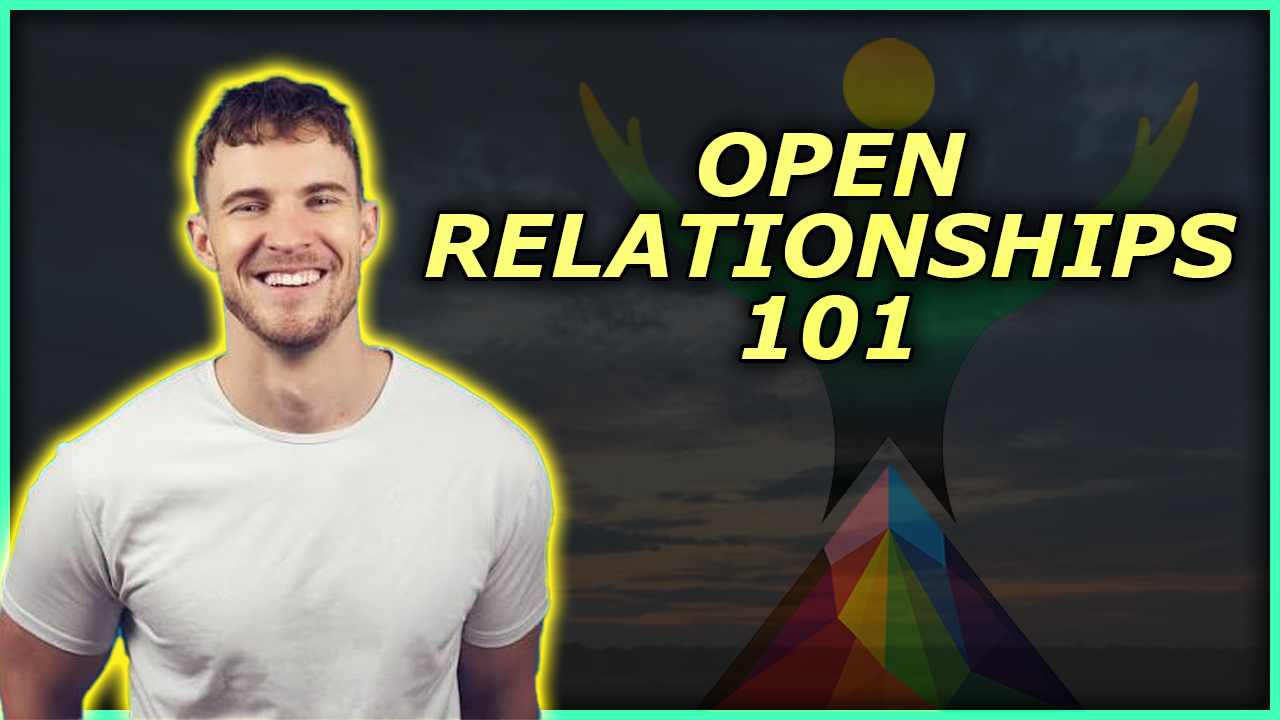
Meet Our Guest: Aidan Wharton
Aidan Wharton is a New York City–based sex and relationships writer, educator, and columnist whose work focuses on open relationships — a niche he came to through lived experience, years of dating within couples, throuples, and open dynamics, and a marriage of eight years built on communication and intentionality. A former Broadway actor, Aidan describes his theater training as a long immersion in the study of emotion and relationships. He now reaches a wide audience through his Substack and Instagram, where he offers practical, judgment-free tools for people curious about non-monogamy.
1. Where Our Relationship Beliefs Come From
Before we can talk about open relationships, Aidan insists we talk about beliefs about relationships — because every one of us walks in carrying them. We absorbed them from our parents and caregivers, from Disney movies, from centuries of romantic storytelling, and from a society that grants married couples elevated status (and tax benefits).
"Whenever you see someone in a happy relationship that doesn't look like yours, it causes a pretty strong emotional reaction because it contradicts the things that you believe about safety and love and belonging."
This is why the discourse around open relationships runs so hot among gay men. The reaction we feel when we see a relationship structure that isn't ours often has less to do with that couple and more to do with our own conditioning about what love is supposed to look like. Recognizing that activation as information about ourselves — rather than evidence about them — is the first skill this episode teaches. For those of us in chemsex recovery, this is familiar territory: learning to notice activation without letting it write the story.
2. Jealousy Is the Teacher, Not the Enemy
Our culture treats jealousy as toxic — something shameful to be avoided or hidden. Aidan flips that completely.
"Jealousy is the best teacher that you could have in an open relationship... It's not the cause, it is the symptom."
Jealousy is a cover for something underneath: fear of abandonment, insecurity, feeling not-enough, feeling untethered. Everyone gets jealous — monogamous couples, open couples, poly couples. The difference, in Aidan's experience, is that open and poly couples often have more practice talking about what's underneath it.
Dallas models this beautifully in the episode by naming his own core wound: exclusion. When a past partner wanted experiences that didn't include him, his system didn't register "different preferences" — it registered a threat. Doing the work to identify your underneath — the specific fear jealousy is protecting — is valuable whether you ever open a relationship or not. And here's the reframe worth sitting with: if exclusion is your wound, a partner who consciously and beautifully includes you could offer healing that might not happen any other way. Openness isn't right for everyone, and knowing that a structure isn't right for you isn't closed-mindedness — it's self-awareness.
3. Communication: Ask, Don't Tell
If there's a single practical takeaway from this episode, it's this: the health of any relationship — open or not — rests on trust, safety, and communication. Aidan offers several concrete tools from his own marriage:
Ask versus tell. "Do you mind if I go see someone this afternoon?" lands completely differently than "I'm going to go see someone this afternoon." Even if the answer is almost always yes, the option to say no keeps both partners empowered.
Check in before, and a bit after. What feels fine one day might not feel fine the next. Mood, mental health, and circumstances all shift — so agreements should breathe rather than calcify into rigid rules.
Beware "don't ask, don't tell." In Aidan's observation, these arrangements are often a cover for unresolved issues:
"If you can't talk about it, you shouldn't do it."
There's a meaningful difference between not needing to hear details and not being able to tolerate hearing them. The first is a preference. The second is a flag pointing to work that needs doing.
The relationship as a third entity. Drawing on his grandfather's practice of counsel, Aidan describes weighing decisions not as me-versus-you, but as what's good for me, what's good for you, and what's good for the relationship. A reluctant "yes" that breeds resentment may be good for one partner but bad for the relationship — which makes it a no.
4. Chemsex, Recovery, and Opening Up
This is where the conversation gets specific to our community. Dallas names a scenario many listeners will recognize: a couple opens up, one partner encounters crystal meth in a hookup context, and a highly addictive substance meets an unprepared nervous system.
Educate yourselves as a couple — in advance. Aidan credits his early, thorough education about meth with staying in his brain for life. Couples opening up should talk explicitly about the signs of use, the language of the scene ("party," "PNP"), and what they'll do if one of them encounters it. Vague warnings aren't enough; specific knowledge is protective.
Know the signs. Dallas walks through real-world red flags: delayed and repetitive messaging, an invitation that comes suspiciously fast with no due diligence about who you are or what you're into, and physical cues once you arrive. Even years into being chemsex-free, the flattery of an enthusiastic invitation can override the alarm bells — which is exactly why knowing the signs before you're in the hallway matters. And when the bells ring, leaving is always allowed.
Book-end your hookups. A text on the way in, location sharing, a check-in after. It's a normal, practical safety practice — and in an open relationship, your partner can be part of that safety system.
If you're re-opening after a slip: make it as easy and comfortable as possible. Aidan's guidance is gold here — choose someone you already know is a safe person, avoid environments associated with past use, and strip away every complication you can, because it's already going to be complicated.
"Open relationships are hard. Open relationships plus recovery plus chemsex are harder."
Aftercare is non-negotiable. With yourself, with the person you were just with, and with your partner. Decide in advance what coming back together looks like — dinner, a bath, a massage, TV on the couch — and expect emotions. You'll only know how you feel about something after you've done it, so build in grace. And know the difference between discomfort, which growth sometimes requires, and feeling unsafe, which is never the assignment.
5. Balanced, Not Equal — and the Machines in Our Pockets
Two final threads deserve attention.
Balanced versus equal. Couples get into trouble trying to keep score — if you hook up, I have to hook up; if you do it that way, so do I. That's a recipe for resentment. Your solo sexual experiences are allowed to be yours. If one partner connects three times a week and the other once a month and both are genuinely content, that's balance, even though it isn't equality.
The apps and the algorithm. Aidan and Dallas land on something bigger than open relationships: the technology through which we seek connection is engineered to keep us anxious, isolated, and scrolling. Endless rejection on swipe apps, the casual cruelty of blocking and ghosting, dopamine loops that reshape how we experience sex and desire — this is the water we're swimming in. For those of us recovering from chemsex, the parallel is impossible to miss: billion-dollar systems profiting from our compulsions.
"The villains are not each other. The villains are the apps."
The invitation isn't to blame other gay men for how hard dating has become — it's to get honest about our phone use, our dopamine economy, and the shame that keeps us from talking about any of it. Because as this episode makes clear, shame is the engine underneath so much of chemsex, and communication is the antidote.
Closing Reflection
Whatever your relationship status — partnered, single, open, monogamous, or beautifully undecided — this episode invites you to look inward before you look outward. The wounds that make relationships hard for us didn't begin in our relationships. They began in exclusion, in shame, in a world that told us our love was wrong. Recovery is where we rewrite that story.
If you're ready to do that deeper work — to heal the wounds beneath the patterns and build a chemsex-free life rich with connection — I'd be honored to walk with you. Visit www.recoveryalchemy.org to learn more about coaching with Recovery Alchemy, and keep an eye out for group coaching opportunities designed to make this work accessible to everyone.
Reflective Questions
- What beliefs about relationships did you inherit from your family, culture, or media — and which of them have you actually examined as an adult?
- When you imagine a partner being intimate with someone else, what emotion comes up first — and what fear might be hiding underneath it?
- What is your core relational wound (exclusion, abandonment, not-enough-ness), and how does it show up in your reactions to other people's relationships?
- Where in your relationships — romantic or otherwise — do you "tell" when you could "ask"?
- How has your relationship with apps and your phone shaped the way you pursue connection, sex, and intimacy?
Journal Prompts
- Write about a time you felt excluded. What did your body feel? What story did you tell yourself? How does that story still operate today?
- Describe a relationship (any kind) that made you feel good and helped you grow. What made it work?
- If jealousy is a symptom and not a cause, write a letter from your jealousy to yourself: "What I'm really trying to protect you from is..."
- Imagine your relationship — current or future — as a third entity with its own needs. Write about what that relationship needs from you that you haven't been giving it.
- Write honestly about a time flattery or excitement caused you to override a gut feeling. What did your nervous system know before your mind admitted it?
Action Exercises
- Name your underneath. The next time jealousy or activation arises this week, pause and identify the feeling beneath it (abandonment, insecurity, exclusion). Say it out loud or write it down within the hour.
- Practice ask-versus-tell. Choose one interaction this week — with a partner, friend, or family member — where you would normally announce a decision, and ask instead. Notice how it changes the dynamic.
- Learn the signs. Whether partnered or single, write out a personal list of red flags that someone may be using (delayed responses, no due diligence, physical cues) and your exit plan when you spot them. Keep it where you can revisit it.
- Build a book-end ritual. Create a simple before-and-after safety practice for hookups or dates: a check-in text to a trusted person, location sharing, and a debrief afterward.
- Audit your dopamine. Track your phone and app usage for three days without judgment. Then choose one boundary — an app time limit, a phone-free hour, deleting one app — and hold it for a week.

Responses