Content Warning: This episode discusses cravings, relapse, secrecy, shame, childhood emotional neglect, and the moment of having a text ready to send to a dealer. If you are in that moment right now, stop reading and reach out to one person before you do anything else.
If you are in crisis or thinking about harming yourself, call or text 988 (Suicide and Crisis Lifeline, US). For substance use support any time, call the SAMHSA National Helpline at 1-800-662-4357. Outside the US, contact your local emergency or crisis line. You do not have to carry this alone.
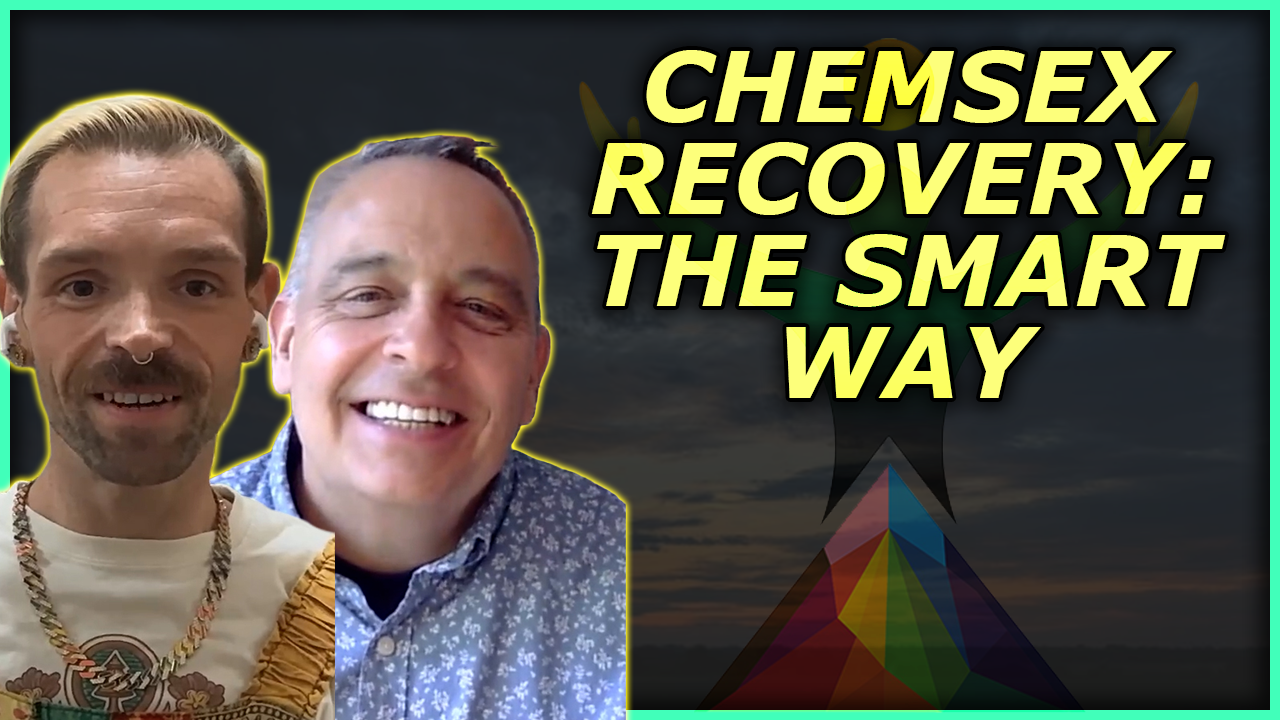
What This Episode Is About
"I need help." For most of us, those are three of the hardest words to say in recovery. They are also the most liberating.
I left home at barely eighteen. I never asked my parents for anything. I bought my own car, paid my own insurance, worked too much, and prided myself on handling my own life. I wanted to prove to my family, to the church, to the bullies, to anybody in West Virginia that I was strong, I was a man, and I was self-sufficient. That same pride kept me in the closet for 36 years, trapped in a life that was not mine, dying inside. When it came to meth, I finally had to wave the white flag and surrender. It was really hard. Vulnerability is never easy, but it is always freeing.
The high-functioning gay men I work with are always excelling outward, and asking for help feels like admitting weakness. My guess is they are trying to prove something, just like I was. But keeping it all inside is the weaker thing. It is the easy way out until it isn't, and it keeps you in bondage. This episode is about silence, secrecy, containment, and the importance of using your voice in chemsex recovery. It covers why the men who cannot ask for help are usually the ones everyone else leans on, why secrecy is fuel for meth, how to build a safe container with your recovery team so that honesty does not get met with a flinch, and five small ways to start saying things out loud.
Key Ideas to Sit With
1. The deflective text. A friend's name lights up your screen: "Hey, been thinking about you." Your thumb hovers. Then you type, "I'm good, crazy busy week, how are you?" Meanwhile you have not slept in three days, you are scrolling in bed until 1 AM, and that old user buddy's number is calling out to you from your phone. Why aren't you honest? Maybe you do not want to be a bother. Maybe you have been a mess for years and assume everyone is tired of it. Or maybe you are holding it in because part of you has a secret plan to use.
2. The helper who cannot receive. The men who cannot ask for help are usually the ones everyone else asks. He is the listener, the rock, the one who remembers your birthday and checks in after your breakup. Fluent at giving support, not fluent at receiving it. That usually goes back a long way, to a house where needing something felt dangerous or wrong and the safest move was to be low maintenance. My dad used to tell me I needed to be seen and not heard. It kept me safe then. It costs me now. Underneath it is usually some version of "I am not enough," or "my needs are too much," or "if they saw the real me, they would leave."
3. Niceness as credit. Here is the sneaky meth part. All that extra showing up, all that extra service, can be a way of building up credit, so that when you go quiet nobody asks questions. If you are the reliable one, it never occurs to anyone that something is wrong. That is an insidious way meth works.
4. Secrecy is fuel. A craving you keep to yourself in the dark builds a charge. It graduates to euphoric recall, which loves to grow in the darkness of your subconscious. Shame works the same way: it needs silence, isolation, and secrecy to keep its grip. When you put something into words, you put it into the light, and your brain responds differently. Naming a feeling out loud turns down its emotional charge, brings your brain back online, and interrupts the autopilot. The thing you do not say keeps its power. The thing you say out loud begins to lose it.
5. Silence stacks. You do not say what you need. Someone asks how you are and you say "fine." The craving shows up and you do not say that. Something accelerates the craving and you do not say that either. Each silence makes the next one easier. After years of this work, I believe the using is rarely what does the lasting damage. The hiding is. Hiding is how one night becomes a weekend and a weekend becomes weeks. The people who love you cannot help you with something they do not know about.
6. The pre-relapse video. One of my clients tried this. Whenever the first fleeting pull showed up, he picked up his phone, turned the camera on himself, and said it all out loud: the fantasy, the plan, the person he wanted to text. No editing. The first time felt cringy. By the third time he could hear how ridiculous it sounded. By the fifth, the craving was gone, because he had gotten it out of his body. The same phone he used to hide on became the place where the craving died. That is reclamation.
7. Your voice is a muscle. One trip to the gym does not give you the body. One act of sharing does not make you an open book. You build it over time, and you start with light weight.
8. Men are not silent because they are dishonest. I have blamed men for this too. But somewhere along the road, telling the truth brought shame, persecution, or the message "you are too much." So the honest part got rejected and shoved into shadow. Now the body says, "Don't be honest, I'm trying to protect you. Remember last time?" Recovery groups can do this too. When the walk of shame for continuing to use becomes unbearable, men lie about their days or stop coming back.
9. How to build a safe container with your recovery team. Even if your team is one person, tell them how to receive it before you tell them what is going on.
- Set the container first. "Before I say this, I need you to know how to hear it. Do not react right away. Do not try to fix it. Do not look scared. Just stay with me. Can you do that?" People who do not understand chemsex panic when they hear "craving," and their panic makes you panic.
- Tell them what a flinch does. A grimace, a gasp, a face. Men have left therapists over one facial expression. Tell them: "If you react in a big way, I will shut down, I will wish I had not said it, and I will not come back. I need you to keep your face calm even if this is a lot for you." Most people can do this if they are prepared. This is you becoming the executive of your recovery.
- Tell them what helps instead. "Don't react" is too vague. Give them lines: "Thank you for telling me." "That must feel difficult." "I don't know what to say, but I'm here." "How can I support you?" And tell them: advice will stop me. There is nothing worse than unsolicited advice.
- Tell them why you are telling them. "I'm telling you this because you are the person I trust with it. Please don't take away the one place I feel I can be honest." People rise to the occasion when they feel needed. This stops sounding like a list of demands.
- Give them a way to come back to you. "If I go quiet anyway, that is not me punishing you or running. That is me protecting myself. Just send one text: you don't have to tell me everything, I'm not going anywhere. That will bring me back."
If you are the loved one, you can offer this yourself: "You can tell me the hard stuff. I won't fall apart, I won't lecture, I won't make it weird. If I get quiet, I'm thinking, not judging."
10. Five ways to say it out loud. Pick one. You do not have to do all of them.
- Say what you need. Start tiny. A hug. What you want for dinner. If asking literally hurts your body, this is the light weight that builds the muscle before the needs get urgent.
- Say how you are. Next time someone asks, give something a little truer than "fine." Just a teeny bit more uncomfortable, without shocking your system.
- Say the craving. Out loud, to your phone if not to a person. "I'm in it right now." A craving is a thought, a thought is energy, and energy grows fast when you add panic to it. Get it out of your body as soon as it appears.
- Say what happened. If you use, tell someone within 24 hours. Not at your next scheduled call. The sooner you tell, the more likely it stays one night instead of the start of a binge. Tell on yourself.
- Say it to the right person. The wrong listener, untrained, makes it worse. Pick someone who can hear the real version without falling apart and without fixing. And set that up before you are in euphoric recall, because then you will not ask.
11. It is okay to not be okay. There is something in this culture where you have to be Pollyanna all the time. You will not be that way in chemsex recovery. Your emotions are everywhere, your brain is scrambling to heal, you are exhausted, and most of your daily energy goes into not using. You need one psychologically safe space where you can say "I am not okay" without shame, guilt, or someone going crazy and making it worse. If "not okay" means there is a text ready to send to a dealer, you may need to ask someone to come over. But sometimes just saying "I am not okay" is the step. The next time, it can be "I am not okay, can you help me?" You cannot get there overnight. One sentence, to one person, once a week.
Reflective Questions
- What is my version of "I'm good, crazy busy week"? Who have I sent it to recently, and what was actually true?
- Am I the one everyone else leans on? What would it feel like to be the one who needs something?
- Where did I learn that needing something was dangerous or too much? Whose voice is that?
- Has anyone ever flinched when I told them something real? What did I do afterward?
- Is there a craving, a plan, or a use I am currently keeping in the dark? What would happen if I put it into words today?
Journal Prompts
- "The last time I asked someone for help, here is what it felt like in my body, and here is what happened..."
- "All the ways I build up credit by being the reliable, easy, low-maintenance one..."
- "If I turned the camera on myself right now and said the whole craving out loud, this is what I would say..."
- "The container I need looks like this. Here is how I want to be received, and here is what shuts me down..."
- "The person I trust with the real version of me is... and the sentence I have not said to them yet is..."
Action Exercises
- Ask for one small thing today. A hug, a ride, a say in what's for dinner. Notice what your body does when you ask.
- Answer "how are you?" with one truer sentence. Just once this week. A little more uncomfortable than "fine," not enough to shock your system.
- Record a pre-relapse video. The next time a pull shows up, turn the camera on yourself and say the entire plan out loud, unedited. Watch how it sounds by the third time.
- Build your container script. Using the five steps above, write out what you will say to your one trusted person before you tell them anything. Send it or say it this week, before you need it.
- Make a 24-hour rule. Decide now who you will tell if you use, and commit to telling them within 24 hours of the comedown. Put their name somewhere you will see it.
Going Deeper
- The post-relapse video. The tool this episode's "pre-relapse video" grows out of. Listen to Combating Euphoric Recall: The Post-Use Video for the full protocol and the free worksheet.
- How to Build Your Chemsex Recovery Team. Who should be in your container and how to train them.
- Shadow work episodes. We have done several on the parts of ourselves we reject and how they run in the background.
- Recovery Alchemy coaching. Learn more at www.recoveryalchemy.org, and subscribe there to get study guides in your email.
- Coming soon: the Monday podcast is becoming a live stream with open Q&A afterward. Watch for the announcement.
You do not have to tell everyone everything. You just have to stop telling no one nothing. One sentence, to one person, once a week. The thing you say out loud loses its power over you. The thing you keep in the dark keeps growing. Start small, build the muscle, and let someone hold it with you.
Love you!! Dallas 💚
© Recovery Alchemy, Inc. | www.recoveryalchemy.org

Responses