Content Warning: This episode discusses meth and other stimulant use, cravings, relapse, euphoric recall, and the behaviors (lying, secrecy, compulsive sex) that get wired into addiction. It is a science-forward conversation, but hearing your own patterns named can still stir things up. If you are in early recovery, consider reading this with your coach, therapist, or a trusted peer.
If you are in crisis or thinking about harming yourself, call or text 988 (Suicide and Crisis Lifeline, US). For substance use support any time, call the SAMHSA National Helpline at 1-800-662-4357. Outside the US, contact your local emergency or crisis line. You do not have to carry this alone.
What This Episode Is About
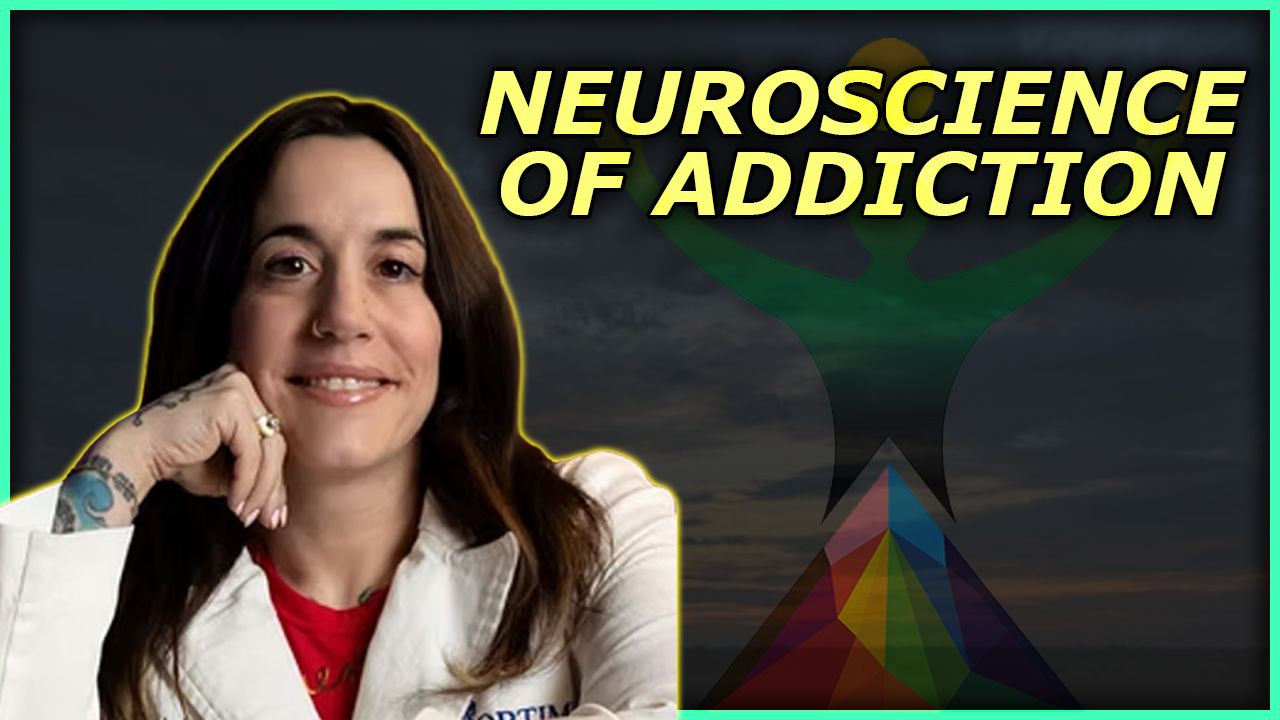
Dallas Bragg calls Season 3 the season of big names, and this one lives up to it. Dr. Nicole Labor is an addiction medicine physician, author, and self-described "sweary godmother" in long-term recovery whose blunt, funny reels on the science of addiction have become a fixture in the feeds of people in recovery everywhere. Dallas found her through a reel on chemsex (still her biggest ever), ordered her 2019 book The Addictoholic Deconstructed, and now recommends it to every client, because it finally made the science click in a way that has made him a better coach.
This conversation is a guided tour through what is actually happening in a brain that uses meth and sex together, and why that pairing is so hard to undo. Nicole explains why addiction qualifies as a disease, walks through her new baseball-field metaphor for dopamine and receptor downregulation, and unpacks glutamate, the "executive assistant to dopamine" that ties meth, sex, Grindr, porn, a room, a person, and a time of night into a single learned network that any one cue can switch on. From there she and Dallas get practical: why cravings negotiate instead of announcing themselves, why "I'm just opening the app" is never neutral, how to interrupt the loop even when you still end up using, why process addictions like sex and scrolling are addiction all the same, and how to rebuild a life that feels rewarding once the drug is gone.
The through-line is both honest and hopeful. The brain's wiring is the reason this is so hard, and it is also the reason it is fixable, with time, repetition, and a new road.
Key Ideas to Sit With
1. Why addiction is a disease. People make choices (what they eat, whether they smoke, whether they use), and for a certain percentage of them those choices produce a real physiological change. Not every smoker gets COPD; the ones who do have a lung change. Addiction is the same: a maladaptive learning system in which the brain wires differently, making it increasingly hard to stop, to prioritize what matters, and to control impulses. That physiological change is the disease. As Nicole's colleague Dr. Kenny Clark puts it, what difference does the label make? Something is wrong, and it needs to be addressed.
2. The baseball field (Nicole's new dopamine metaphor). Your midbrain is a baseball field with a hundred players (receptors) waiting to catch balls (dopamine). Enjoyable things like music or exercise release 20 to 30 balls, and you need about ten catches for your brain to say "I like that, do it again." Meth dumps 400 balls. The team manager looks at all these players catching balls and says, "I'm not paying for all of this," and starts pulling players off the field. That is downregulation. Eventually there are ten players scattered around, so music's twelve balls mostly hit the ground. Nothing normal feels good anymore, and the only way to feel anything is to dump 400 balls again. The drug becomes the baseline.
3. The players only come back with time away from big dopamine. The brain does not care whether you dump 400 balls once a day or ten times a day. Tapering reduces the damage to your life (money, time, bad decisions), and that matters, but it does not bring receptors back. Neither does swapping meth for a "lesser evil" like cannabis or kratom. As long as that part of the brain knows it can get a flood, the manager keeps the players off the field.
4. Chemsex stacks two of the most rewarding things a brain knows. Meth plus sex, often plus porn, fetish, apps, and more, all get paired until the brain treats them as one experience. Sex becomes a drug cue, and the drug becomes a sexual cue. Then euphoric recall kicks in, and your brain, which is "so good at pulling up highlight reels," shows you the intensity, the arousal, and the confidence, and edits out the crash, the consequences, and the three days of misery. The craving does not start as "I want meth." It starts as feeling horny, opening an app, seeing a certain kind of porn, remembering a certain person.
5. Glutamate: the executive assistant to dopamine. Dopamine stamps something as important. Glutamate builds the file around it, cataloging everything in the vicinity. When neurons for sex and neurons for meth fire together over and over, they get very efficient at activating each other. After enough repetition, you do not need the drug to start the loop. Any cue will do. Dallas, eight years in, heard a crème brûlée torch in a restaurant and was instantly back there. Nicole tasted IV vitamins twenty years after heroin and had the same jolt. These associations last.
6. Lying and sneaking get stamped too. If being secretive, shady, or dishonest is part of the road to the dopamine, the brain catalogs those behaviors as rewarding. Just the sneaking produces a little anticipatory excitement. Family members judge this as a moral failure, and Nicole understands why, but it is part of the same disease. Most people with addiction have strong values and know right from wrong. Their executive function is impaired, and their guilt about lying often feeds the loop more than anything.
7. You cannot recover without uncoupling sex from the drug. This is what makes chemsex recovery uniquely complicated. You can avoid meth, but nobody should have to avoid their sexuality for the rest of their life. The brain has to be retaught that sex can be rewarding without the drug. Nicole's honest answer for how long that takes: time. A lot of time.
8. The road from A to B. Every repetition of "I feel A, I want to feel B, so I use" widens that road until it is the superhighway of your brain. The thinking, planning, pros-and-cons part of the brain stops being used, because the highway does not need it, so it weakens. Recovery means getting off the road and building a new one, which starts as a footpath through the forest and only becomes a road with repetition. Expect discomfort while the new road is being built.
9. Cravings negotiate. They do not announce themselves. "I'm just checking Grindr to see who's on." "I'm just going to the party." The addicted brain does not have to convince you to use. It only has to convince you to take the next step. If the app is part of the conditioned network, opening it is never neutral; it is a cue that lights up the whole network, and a craving at a two becomes an eight. That is why Dallas insists on locking down the phone in early recovery. It builds in the pause that the brain cannot yet produce on its own.
10. Interrupt the loop, even if you still use. The pause takes practice. But you can interrupt the chain at many points: splash cold water on your face, jump up and down for thirty seconds, run around the block, get in the shower. Even if you pick the loop right back up afterward, you have put a chink in the armor. The road is built by uninterrupted repetition, so every interruption makes it less efficient, and the more often you interrupt, the easier the pause becomes. Do not fall into "I paused and still used, so it doesn't work." It is working.
11. Addiction is addiction. Nicole approaches different addictions differently only because of the person in front of her, not because of the object. Drugs, gambling, porn, sex, scrolling for the next three cherries on the Grindr grid: it all dumps dopamine, builds glutamate loops, rewires the brain, and erodes executive function. That is why people who stop one behavior so often jump straight into another that looks different on the outside but is identical to the brain. Dallas names his own version: after he stopped meth, the sexual compulsivity kept going.
12. Life after not dying. So much effort goes into teaching people how to stay clean and not die that the life afterward gets forgotten. That is the subject of Nicole's second book, The Addictoholic Reconstructed. Her prescription when everything feels dull: dopamine stacking. Go back to the things that used to release 20 balls, and stack several at once, like music, sunlight, and exercise together. They will not feel good right away. Do them anyway, because as the players return, those are the behaviors they will recognize first. Then work on meaning and purpose (if "higher power" does not land, swap in "purpose"), and learn to be bored, ideally with other people who are also learning to be bored.
13. Detox from the whole network. Do a deep dive on what is linked together for you: one app or all apps, one place, one drug, one kind of porn. Eliminate those first. If fringe things still trigger you, eliminate those too, for as long as you can, until you are restless and bored. Then make sure you are engaging with other people and doing a recovery thing. You cannot simply abstain from something that made you feel great and expect to be okay. You have to build something new.
14. Nobody is entitled to never feel bad. Finding a different B will never work as well as meth did, and Nicole says so plainly. But if you do the work to find meaning and depth, you may find it more rewarding than blasts of dopamine. Somewhere our society decided we should never feel uncomfortable and should medicate every bad feeling. You are human. Discomfort is part of it.
15. Streaks, slips, and the accident board. Brains like streaks, the way a warehouse likes its "27 days since our last accident" sign. The sign does not give a worker his finger back, but it signals that safety is the culture. If counting days stresses you out, do not count. If it motivates you, count. And if you had six months, used for two weeks, and then got another month, you have seven months. It does not matter that it took eight months to get there. You were still building the whole time. A slip does not undo the road you have built.
16. Get in the lifeboat. Phone locked down, location shared, chaperones, whatever it takes in early recovery. It is not forever. What keeps you safe right now is not what you will need a year from now. Get in the raft first. Worry about what to do on shore once you get there.
Reflective Questions
- What are the "players" on my field catching right now? What used to feel good that no longer does?
- What is stacked into my network? Which apps, places, people, kinds of porn, times of night, and rituals are wired to the drug?
- When my craving negotiates with me, what does it usually say? What is the "next step" it convinces me to take?
- What behaviors besides using (sneaking, lying, cruising, scrolling) give me a little anticipatory buzz?
- What did I jump to after I stopped using, and does it look different on the outside but feel the same on the inside?
Journal Prompts
- "The road my brain built from A (the feeling I want to escape) to B (the relief) looks like this, step by step..."
- "The cues that still light up the network for me, even years later, are... and here is what happens in my body when they do..."
- "The things that released 20 balls before meth were... and the ones I could stack together this week are..."
- "If I stopped expecting to never feel uncomfortable, I would..."
- "My honest relationship with counting days is... and what would actually help my brain is..."
Action Exercises
- Map your network. List every element that is paired with using for you: apps, places, people, porn categories, rituals, times, sounds, even tastes. Circle the ones you can remove this week. Remove them.
- Practice the interruption. Pick two physical pattern-breakers (cold water on the face, thirty seconds of jumping, a walk around the block). Use one the next time the negotiation starts, even if you think you will use anyway. Log it.
- Build the pause into your phone. Lock down app downloads and block the sites in your network, and give the passcode to someone on your recovery team. Treat it as a lifeboat, not a life sentence.
- Dopamine stack daily. Combine at least three pre-meth pleasures in one block of time (for example, music plus sunlight plus movement). Do it every day for two weeks whether or not it feels good yet.
- Schedule being bored with people. Find one recovery community activity (a meeting with a social component, a meetup, a picnic, a Zoom room you show up to often enough to be recognized) and put it on the calendar.
Going Deeper
- The Addictoholic Deconstructed by Dr. Nicole Labor (2019). The book Dallas recommends to every client; it breaks down the neuroscience of addiction in plain, profane, memorable language.
- The Addictoholic Reconstructed by Dr. Nicole Labor. The follow-up on rebuilding a life after not dying: connection, purpose, goals, mindfulness.
- Dr. Nicole Labor on Instagram and Facebook. Her reels on addiction science, including the chemsex reel that connected her and Dallas. Contact details in the show notes.
- Related AfterMeth episodes: Combating Euphoric Recall: The Post-Use Video (EP 3:44), Top Chemsex Trigger: Re-Entry (EP 3:40), and the family dynamics episodes with Charlie Bray, for loved ones trying to understand lying and boundaries.
- Recovery Alchemy coaching. Dallas's program applies these principles directly: locking down access in early recovery, interrupting patterns, and building a new road. Learn more at www.recoveryalchemy.org.
- Join the conversation. Comment on Spotify or YouTube, or DM Dallas.
Your brain built a superhighway, and it did exactly what brains are designed to do. Now you get to build a new road. It starts as a footpath. It gets wider every time you walk it. And every time you interrupt the old loop, even if you end up using anyway, you are making the old road a little less efficient and the new one a little more real.
Love you!! Dallas 💚
© Recovery Alchemy, Inc. | www.recoveryalchemy.org
Responses