
Content Warning: This guide discusses chemsex, sexual trauma, non-consensual experiences, sexual reintegration, and explicit references to sex and the body. Please move through it at your own pace. If anything here stirs up something that feels too big to hold alone, pause, breathe, and reach out to someone you trust or a professional who can support you.
A Note From Dallas
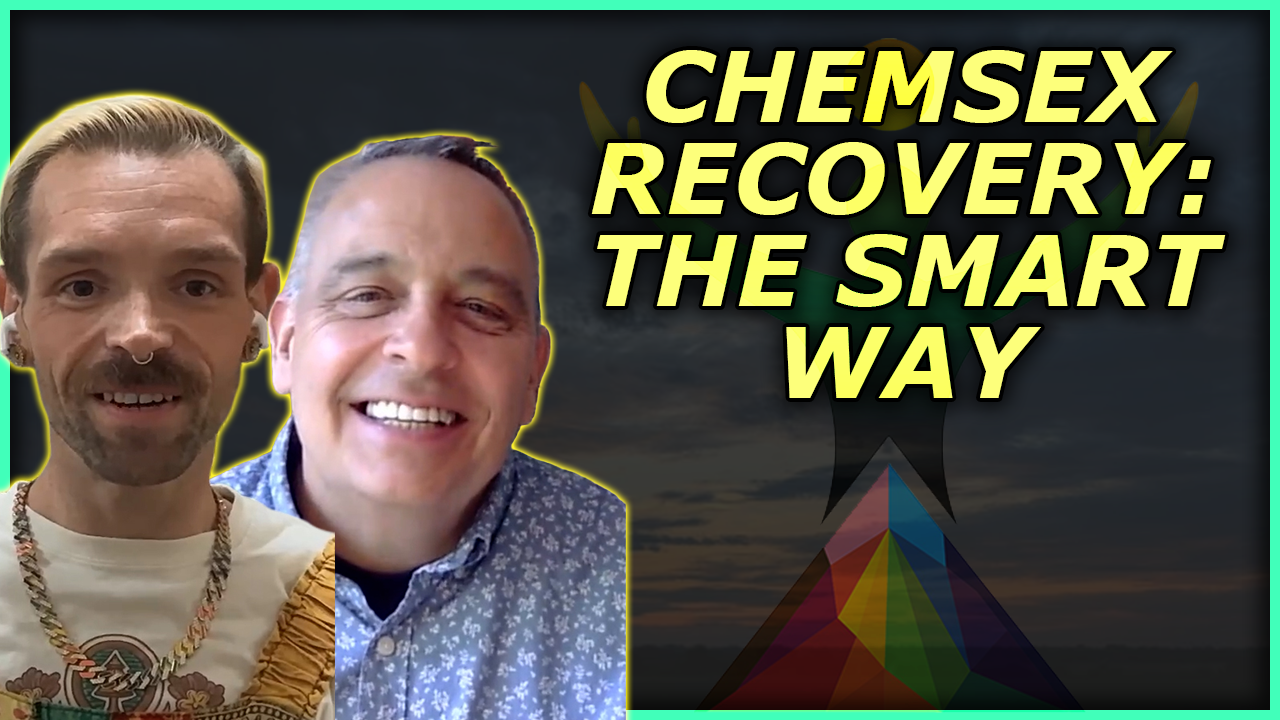
Y'all, this episode is close to my heart because it's not about a guest sharing their story from across the room — it's about my best friend and me pulling back the curtain on the actual work we've done together over the past three years.
When clients come to me, they've often gotten to a place where they've stepped away from the substance, and then comes the part nobody warns them about: now what do I do with my body, my desire, my heart? I talk to men who haven't been sexual in fifteen years. Men who can't get an erection. Men who are convinced that intimacy is gone for good. So much of what we lost to a so-called "sex drug" wasn't really about sex at all. It was about connection — the thing we were starving for the whole time.
So I wanted to do something different. I wanted to bring on Thr33 — my intimacy friend, my best friend — and let you see, in real time, how two gay men built something tender and honest out of fear, false starts, and a whole lot of triggers. This isn't a how-to from a guru. It's a peek behind my own walls. I hope it gives you a glimpse of what's possible when you let someone see in.
A quick word on language: when I say intimacy, I am not talking about sex. That's the whole point. Intimacy is "into me, you see." It's letting another person look inside and trusting they won't run. For a lot of us who spent decades in the closet, that's the scariest thing in the world. Let's get into it.
Love you, Dallas 💚
About Thr33
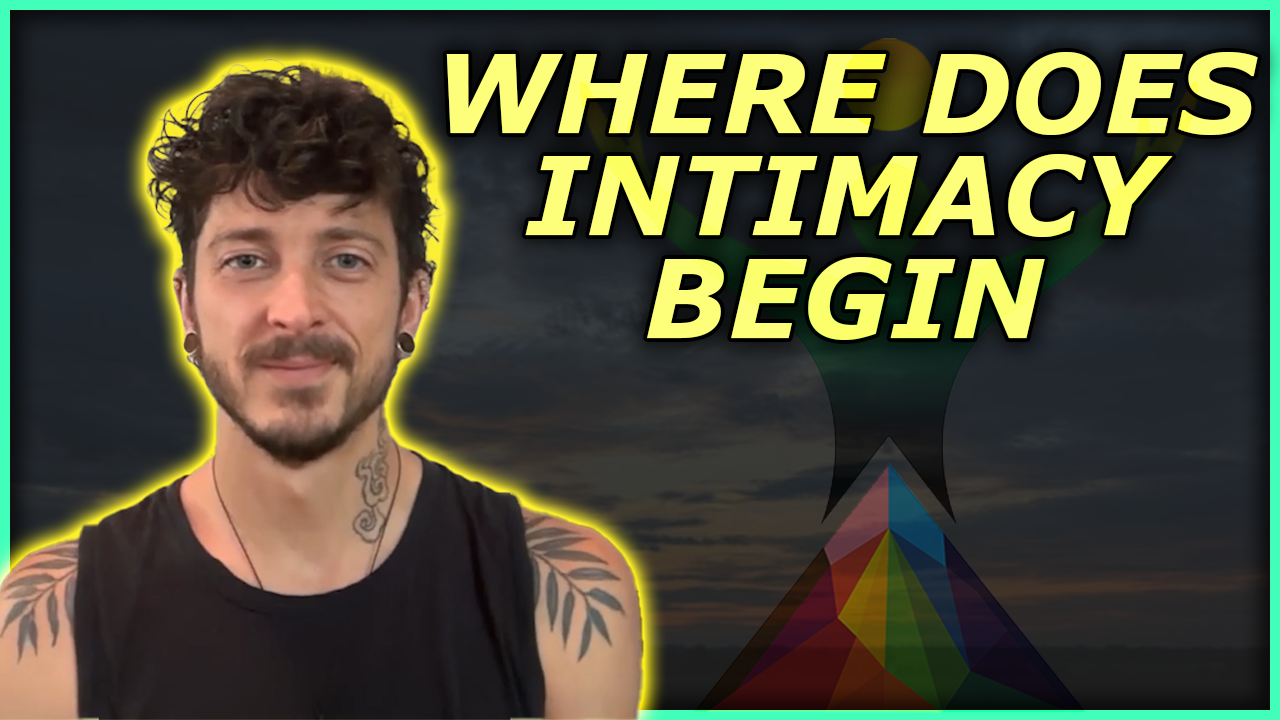
Thr33 — who you may also know online as Tucker — lives in the Asheville, North Carolina area and is a yoga instructor by trade, focusing on therapeutic yoga for people navigating injury, surgery recovery, or discomfort in their bodies. He describes himself as a recovering people-pleaser on an ongoing journey toward authenticity and deeper connection, both with his own inner truth and with the inner truths of others. Thr33 and Dallas met on a dating app three years ago and, over time, built a friendship that became a living model of what conscious, boundaried intimacy can look like between gay men. You can find his work at TuckerYoga.com or @tucker_yoga on Instagram.
Boundaries as the Birthplace of Intimacy
The friendship started with a boundary — and that boundary is where the intimacy actually began. Early on, Thr33 told Dallas plainly: I like you, I like talking to you, but I'm not available for anything sexual or romantic. For Dallas at the time, boundaries felt like rejection. His old pattern was simple: someone sets a limit, you block them and move on. But Thr33 set the boundary in a way that was honest, gentle, and immediately followed by and I still want to get to know you.
That combination — clarity plus warmth — got Dallas's attention. Thr33 later explained that he learned about boundaries the hard way: by not having them and suffering the consequences. As a recovering people-pleaser, he found it was easier to name his limits right at the start rather than letting things get tangled and have to be unstuck later.
Here's the reframe that matters for anyone in chemsex recovery: a boundary is not a wall that keeps people out. It's the doorway that makes real closeness possible. Thr33 didn't fade away or ghost — the two reflexes so many gay men default to. He took the vulnerable risk of saying where he actually stood. That small, honest comment was the first marble in the jar.
Triggers as Messengers, Not Verdicts
As the friendship deepened, Thr33 began saying "I love you" in voice memos — and Dallas was activated by it. It felt too vulnerable, even like a slap in the face, because Dallas still carried romantic feelings and here was this love being offered in a form he hadn't expected. (Dallas is candid that in his chemsex years, his fetish was having a man tell him he loved him — a detail that says everything about the wound underneath.)
The breakthrough wasn't avoiding the trigger. It was naming it. Dallas was able to say: this is making me feel triggered, and it's not because of you — it's my own stuff coming up. That was their first repair. And the two of them built a shared language around it: you are being used by the universe to send me a message about where I need to work. The trigger stops being personal. It becomes information.
There's a famous moment in this episode: Dallas sitting in a restaurant, listening to a voice memo from Thr33 about another man, his whole body flooding with jealousy, abandonment, and rejection. Instead of texting something reactive or shutting down, he gripped the table, closed his eyes, and let the feeling move through him — up from his feet, through his body, and out the top of his head. He looked up shaking and crying, the server asking if he was okay, and he felt good. That's leaning into the big trauma emotions instead of numbing them. As Thr33 put it, relationships are mirrors; they show you what's inside. The work is to treat that as a growth moment rather than proof it's all falling apart.
The Container, the Marbles, and Going Slow
Two images anchor this episode. The first is the container — the agreed-upon structure of a relationship: what I'm looking for, what I'll tolerate, what I won't, what I need. Thr33 uses pre-stated boundaries as a filter. When he meets a new gay friend, the very first conversation includes here's where I am. How the person responds tells him everything: will they meet him in the container, or show him it isn't a fit? A strong filter saves enormous time, heartbreak, and energy spent repeating old patterns.
The second image, borrowed from Brené Brown, is the marble jar. Trust is built one marble at a time — each moment someone shows up and proves they won't run away. When there's a rupture, marbles are lost, and the rebuild is slow. Dallas names the two extremes many of us swing between: hoarding every marble and never letting anyone in, or dumping the whole jar into someone's lap on day one with no cost of admission. Intimacy lives in the patient middle — let me trust him with this, now with that, and watch how he responds.
And both men return again and again to the same principle: go slow. Thr33 is direct about it — if it feels amazing really fast, that's a red flag. Too much too fast is a spike of energy that can't be sustained, and what spikes will crash. The intimacy worth having is built gradually, so that you can trust it's solid, stable, and something you can rely on. This is the antithesis of the chemsex container, where there were no boundaries, no pacing, and often no consent.
What Intimacy Actually Felt Like
The most tender turn in the episode is physical — but not in the way the word usually implies. Dallas and Thr33 decided to lie together, even with no clothes on, under clearly pre-described boundaries: no kissing, no touching genitals. The first time they did this, something broke loose in Dallas. Lying there with a naked man and no expectation of sex, it dawned on him: he is here just for me. He doesn't want me to perform, to be rough, to be anything. He wants me for me. Dallas cried the whole weekend. That, he realized, is what intimacy feels like underneath all the performance and pressure — what if I don't get hard, what if I come, should we, shouldn't we — a soul-level connection beneath all of it.
Just as important was the repair that followed. Thr33 eventually made a clear decision that he wasn't available to go further physically, and began to pull away. Dallas — proud of how he handled it — pulled him aside, sat him down, and reassured him: it's okay, I'm good, I'm fine. And he meant it. He had never before been able to simply lie with a man with no expectations, his own or anyone else's. What this gave Dallas wasn't a relationship; it was a glimpse — proof that if he could lower his walls, intimacy with a gay man was possible. And Thr33 is not the only man in the world he can do that with. For someone coming out of the chemsex world — where so many carry the belief that men are only out to use them — that hope is everything.
Closing Reflection
Here's what I most want you to take from listening to Thr33 and me wander down memory lane: you do not have to start with a fuck buddy or a massage or a perfect chemsex-free date. You start with vulnerability. You start by telling one person something that's hard to say — even just I have an issue with chemsex. That is intimacy. That is into me, you see.
I'm not the guru of any of this. But practicing intimacy with a friend changed my whole sexual reintegration. I'm not clingy and needy the way I was. I don't pour out the whole marble jar the second someone smiles at me. I built a happy intimate life, and it grew out of one boundaried, committed, gloriously slow friendship.
Whatever trauma you carried before meth was waiting for you after meth — the anxious attachment, the hurt feelings, the hunger to be loved. The substance only ever numbed it. The good news is that the same wound can be healed in connection, marble by marble, with another human who's willing to go slow with you.
Love you, Dallas 💚
Reflective Questions
- Thr33 set a boundary that, at first, felt like rejection to Dallas — yet it became the foundation of their closeness. Where in your own life have you mistaken someone's boundary for rejection, or feared that setting your own would push people away?
- Dallas describes intimacy as "into me, you see" — letting another person look inside. What is the part of yourself you most fear someone seeing, and what do you believe would happen if they did?
- The episode frames triggers as messages about where you need to work, rather than evidence that someone has wronged you. When you were last triggered in a relationship, what might that reaction have been pointing you toward in yourself?
- Consider the two extremes Dallas names: hoarding every trust marble, or pouring the whole jar out at once. Which pattern is more familiar to you, and how has it shaped your relationships?
- Thr33 warns that intimacy which feels amazing too fast can be a red flag. Looking back, can you identify a connection that spiked quickly and then crashed? What might "going slow" have looked like instead?
Journal Prompts
- Write about your earliest memory of feeling truly seen by another person — or, if you can't find one, write about what it would feel like to be seen that completely and safely.
- Describe a boundary you've been afraid to name with someone in your life. Draft the words you might actually say, the way Thr33 did: clear, gentle, and followed by what you are open to.
- Dallas sat in a restaurant and let a wave of trauma emotion move all the way through his body without acting on it. Write about a strong feeling you're currently numbing or pushing down. What might it be trying to tell you?
- Imagine your own "container" for a future relationship — friendship or romantic. What do you need inside it? What will you not tolerate? Write it out as if you were describing it to someone you trust.
- Reflect on the belief many carry out of chemsex: that men are only out to use you, or that intimacy is lost for good. Where did that belief come from for you, and what evidence — even small — might gently challenge it?
Action Exercises
- Plant one marble. This week, share one small, slightly-hard-to-say truth with a friend or family member — not your deepest secret, just something a notch beyond your comfort zone. Notice how they respond, and notice how you feel afterward.
- Practice the boundary-with-warmth formula. The next time you need to set a limit with someone, pair it with an opening, the way Thr33 does: name the boundary, then name what you're still available for. Write the sentence down before you say it.
- Ride one trigger to completion. When you next feel activated in a relationship, commit to not reacting immediately. Find a safe, private space, let the feeling move through your body, and stay with it until it passes. Afterward, jot down what came up and what it might be pointing to.
- Map your concentric circles. Draw yourself at the center and the people in your life in rings around you, based on how much trust you've actually built. Identify one relationship you'd like to slowly deepen, and choose one specific, paced step toward it this month.
- Name a charge. If there's a build-up of unspoken energy with someone close to you, practice Thr33's approach: tell them, "I'm experiencing a charge and I'd like to share it and connect with you," then describe the feeling without listing grievances or bringing up the past. Notice how naming it changes things.


Responses