Content Warning: This episode and study guide include candid discussion of chemsex, trauma, and addiction, as well as explicit language and frank descriptions of cruising, hookup culture, and sex used as a coping mechanism. Please take care of yourself while engaging with this material, and skip ahead or step away if you need to.
A Note From Dallas
I spent four decades mistaking survival for personality. "Regulation" wasn't even in my vocabulary until my forties.
For years, "regulation" sounded like a buzzword for people with too much time on their hands. What I didn't see was that almost everything I called my "addiction," the meth, yes, but also the chasing, the apps, the rejection I kept setting myself up for, was my nervous system trying to find safety the only way it knew how.
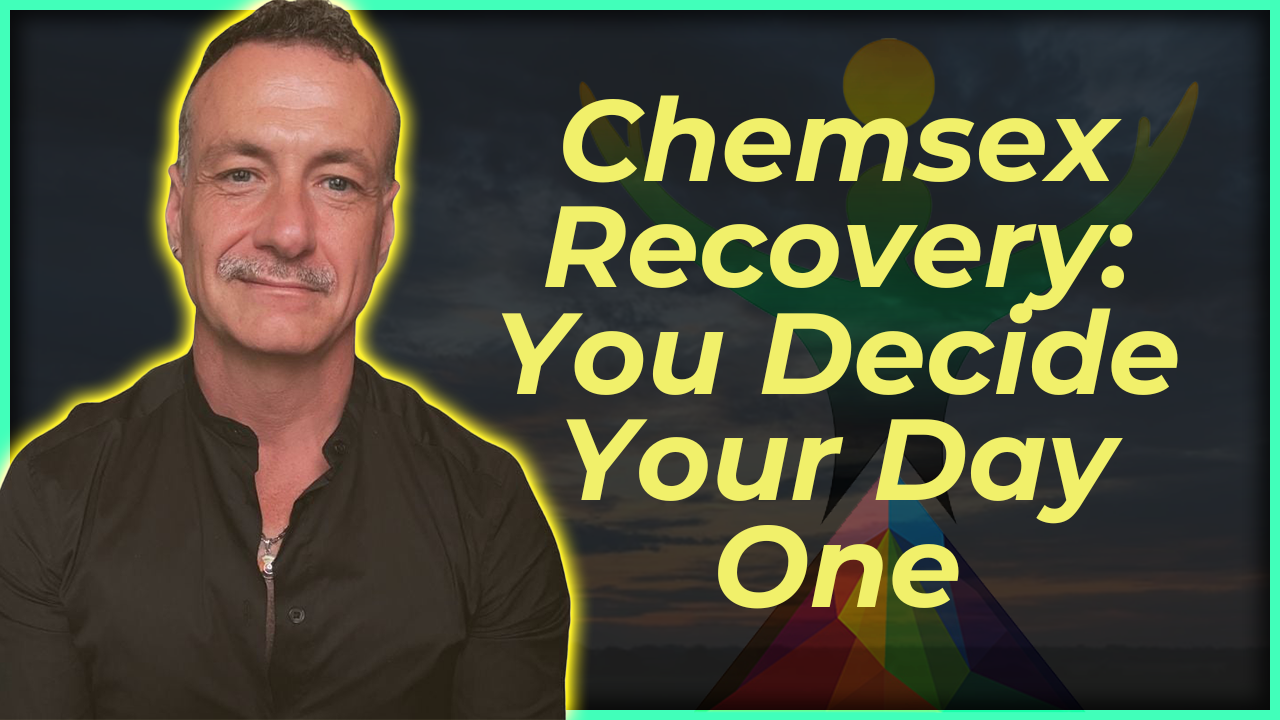
This conversation with Doug Marshall cracked something open. We talk about why instant gratification became the language of survival for so many of us gay men, why our community can feel glamorous and devastatingly lonely at once, and why healing isn't a finish line but a relationship you build with yourself, one day at a time.
I'll be honest about my own history too. Years chasing connection through apps and hookups, mistaking escape for intimacy. I'm not over every bit of it. I'm still doing the work in my own way, and that's the most honest thing I can offer you: this isn't a guide written by someone who has arrived. It's written by someone still walking the path beside you.
If you've ever been told you're "too sensitive" or "too dramatic," I hope this episode helps you see that what you're carrying isn't a character flaw. It's a nervous system that needed protecting and never quite got the chance to put its guard down. Let's start putting it down together.
Love you. 💚 Dallas
Meet Our Guest: Doug Marshall
Doug Marshall is a trauma-informed certified life coach and somatic practitioner who helps people heal deep wounds and regulate their nervous systems so they can live more fully in their bodies and their lives. After years of doing his own deep work around trauma, addiction, and emotional regulation, Doug now guides others out of survival mode and into a more connected, empowered version of themselves. His approach blends neuroscience, somatic practice, and lived experience, delivered in a way that feels honest, relatable, and easy to apply. Doug facilitates recovery groups in Los Angeles, works with clients one-on-one and in monthly online groups, and has built an online community where people gather for healing. You can find him on social media and at theworldofdoug.com.
Thematic Sections
1. Why Instant Gratification Became Our Native Language
Doug and Dallas open by naming something many of us recognize instantly: the move away from chemsex and meth use is, at its core, a move away from instant gratification and toward delayed gratification. When we were using, the formula was simple — feel something uncomfortable, eliminate it immediately. Lonely? There's an app for that. Dysregulated? There's a pipe for that. Society has reinforced this pattern at every turn, training us through delivery apps, hookup apps, and endless scrolling to expect that any discomfort can be resolved in minutes.
What Doug makes clear is that nervous system work asks for the opposite. It is not a quick fix, not a six-week transformation, and not something you complete and then move past. It's an investment, often in both time and money, though increasingly there are accessible and affordable ways to begin. The goal isn't to eliminate every uncomfortable feeling the moment it arises. It's to build the capacity to sit with it.
This reframes recovery itself. We aren't just removing a substance. We're rewiring a lifetime of conditioning that told us comfort should be instant and discomfort should be avoided at all costs.
2. The Biology of Dysregulation: Amygdala, Cortisol, and the Hijacked Brain
Doug offers a piece of brain science that reframes a lot of shame for many of us. The amygdala, a small almond-shaped structure in the brain, is our primitive danger detector. It existed long before our prefrontal cortex, the rational, logical part of the brain responsible for planning, memory, and decision-making. When the amygdala senses danger, real or perceived, it floods the body with cortisol and adrenaline, the body's stress hormones, preparing us to fight, flee, freeze, or fawn. In that moment, digestion shuts down, the reproductive system shuts down, and the prefrontal cortex goes offline. We are, quite literally, no longer thinking. We are surviving.
This matters enormously for those of us who grew up gay. Doug names something many in our community feel but rarely articulate: our nervous systems may carry an extra layer of vigilance because so many of us grew up keeping a secret, performing a version of ourselves to stay safe, and absorbing rejection or bullying long before we had the words for what was happening. A dismissive text, a slur on the street, an unanswered message on an app — these can all register to an already-activated nervous system as genuine danger, triggering the same biochemical flood as a physical threat.
Understanding this doesn't excuse harmful behavior, but it does explain it. The reach for a substance, an app, or a stranger in a moment of dysregulation isn't a moral failing. It's a hijacked brain doing what it was wired to do: escape danger by any means available.
3. The Pattern Behind the Apps: Rejection, Repetition, and Wiring
One of the most vulnerable threads in this episode is Doug's exploration of how cruising, hookup culture, and the apps we use today can become wired pathways for repeating old wounds rather than healing them. He describes a pattern from the trauma community called repetition compulsion: the unconscious drive to recreate an old rejection in hopes of finally "winning" it, proving worthiness in a moment that mirrors the first time we felt unworthy.
For many gay men, this can show up as being most drawn to the people who are least available, chasing validation from someone who has already shown disinterest, or feeling an almost magnetic pull back toward an app or a person associated with past rejection. Doug is careful to frame this without judgment. These patterns formed for understandable reasons, often rooted in childhood experiences of feeling unseen, unaccepted, or unsafe to be fully ourselves.
A crucial reframe offered in this section: the rejection or disinterest we encounter from others on apps or in hookup culture is very often not personal. It frequently reflects the other person's own dysregulation, fear of vulnerability, or inability to be present, rather than anything true about our worth. Learning to separate "this happened" from "this means something is wrong with me" is presented as one of the most freeing shifts available in recovery.
4. Naming Your Coping and Numbing Behaviors
Doug offers a gentle but direct framework for self-assessment: what are your go-to coping or numbing behaviors, and what feeling are they helping you avoid? He's careful to note that this isn't about judgment. Almost any behavior, from scrolling, to shopping, to food, to sex, to substance use, can function as a way of regulating an overwhelmed nervous system. The question isn't whether a behavior is "good" or "bad" in some absolute sense, but whether it's genuinely helping or simply providing a temporary escape that creates more shame afterward.
He describes a useful pattern to watch for: the dopamine payoff followed by the shame aftermath. If a behavior consistently leaves you feeling worse about yourself once the initial relief fades, that's worth examining honestly. This section also introduces the idea of a "window of tolerance," the range within which we can experience stress and still access our rational mind. Above the window, we may become reactive or explosive. Below it, we may shut down, dissociate, or go numb. Knowing your own window, and noticing when you're approaching its edges, is presented as a foundational skill in recovery.
5. Somatic Tools for Coming Back to Safety
The episode closes with several concrete, body-based tools Doug uses with his clients and himself. The heart hold, drawn from Internal Family Systems work, involves placing a hand on the heart and a hand on the belly, breathing slowly, and gently asking the body what it's actually feeling and what it needs. The butterfly hug, based on bilateral stimulation, involves alternately tapping the chest to send a calming signal between the left and right hemispheres of the brain during moments of high activation.
Doug also describes mirror work, intentionally looking at yourself and offering compliments or affirmations, even though it can feel awkward at first, and the practice of asking "what evidence do I actually have for this feeling?" when an old, familiar narrative arises. He's honest that none of these tools eliminate discomfort instantly. The goal isn't to never feel triggered again. It's to build a slightly longer pause between feeling and reacting, even if that pause starts at just thirty seconds, so that new neural pathways can begin to form over time.
Closing Reflection
This episode is a reminder that the goal of recovery isn't to become a person who never feels dysregulated. It's to become a person who knows how to come home to themselves when dysregulation happens, with compassion instead of shame. If any part of this resonated with you, especially the apps, the rejection patterns, or the body's wisdom Doug describes, I'd love to walk alongside you in that work.
If you're ready for more personalized support on this path, I invite you to visit drdallasbragg.com to learn more about the Recovery Alchemy coaching program.
With love, Dallas 💚
Reflective Questions
- What are my go-to coping or numbing behaviors when I feel dysregulated, and what feeling might they be helping me avoid?
- Where in my life do I notice the pull of instant gratification, and what would delayed gratification look like in that same moment?
- Can I identify a relationship or pattern in my life that feels like repetition compulsion — trying to "win" an old rejection rather than heal it?
- When I feel rejected by someone, especially online, how much of that feeling is actually about me versus about their own state of dysregulation?
- What does my window of tolerance feel like, and what are the early signs that I'm approaching its edges?
Journal Prompts
- Write about a moment from childhood when your feelings were minimized or dismissed. What did you learn to believe about your emotions as a result?
- Describe your relationship with your phone or hookup apps. What need is it meeting, and is there a different way to meet that same need?
- Think of someone whose rejection or unavailability you have chased. What does that person represent to you, and where does that story actually begin?
- Write a letter to the part of you that learned to perform, fawn, or hide in order to stay safe. What would you want that part to know now?
- Reflect on a time you felt sad, angry, or activated and chose to sit with the feeling rather than escape it, even briefly. What did you notice in your body?
Action Exercises
- The next time you feel the urge to reach for your phone, an app, or a numbing behavior, pause for thirty seconds before acting and notice what comes up.
- Practice the heart hold: place one hand on your heart and one on your belly, take a few slow breaths, and ask yourself what you're feeling and what you need.
- Try the butterfly hug during a moment of stress this week: cross your arms over your chest and alternately tap each side gently while breathing slowly.
- Stand in front of a mirror and offer yourself one genuine compliment or affirmation, even if it feels uncomfortable at first.
- Do a brief inventory of how you spent your time this week. Identify one moment that was coping or avoidance rather than true regulation, and name what you might try instead next time.

Responses