⚠️ Content Warning: This episode and study guide contain candid discussion of chemsex and sexualized drug use, including methamphetamine, GHB, and other substances. There is also discussion of stigma, shame, relapse, homelessness, and the complex realities of both active use and recovery. If you are in early recovery and feel that non-judgmental conversation about chemsex could be destabilizing for you right now, please care for yourself first. There are plenty of other episodes to explore. Come back to this one when you're ready.
A Note from Dallas
This conversation moved me.
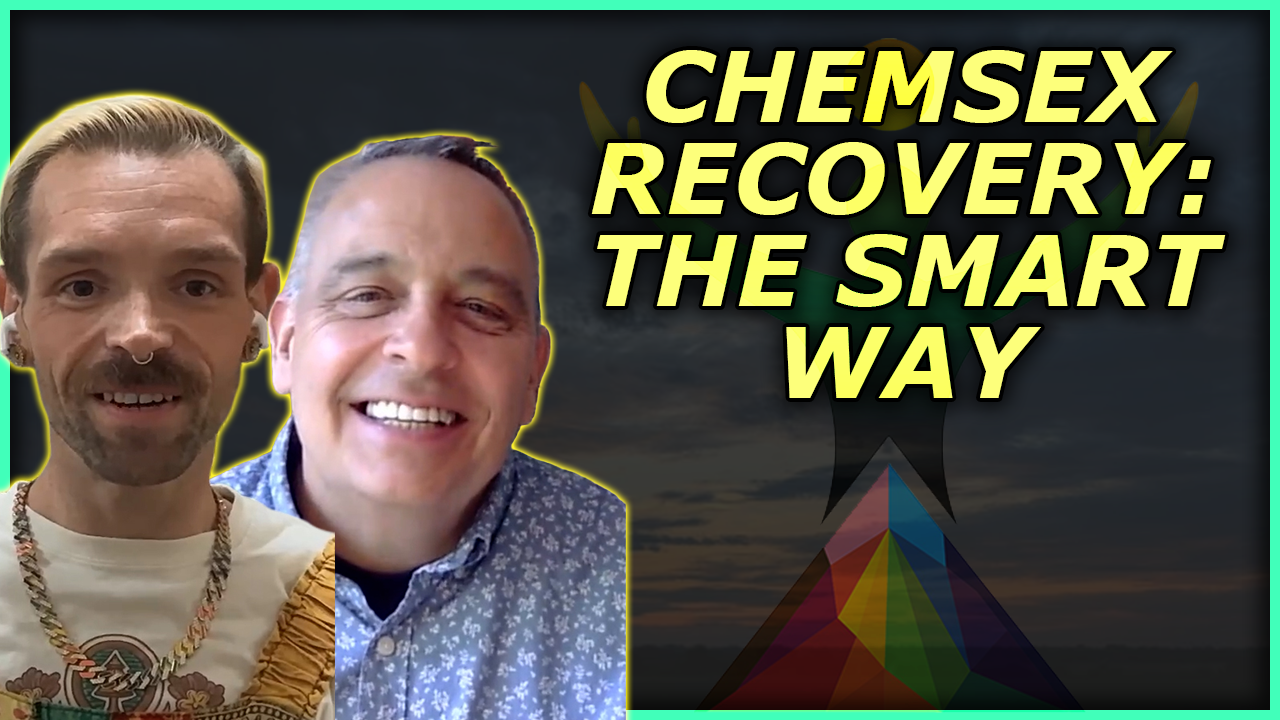
It was free. Free of the kind of shame-soaked language we so often hear when chemsex enters the room. Patrice and Bradley came in with curiosity, with lived experience, and with a commitment to holding space for the full, complicated, human truth of what it means to engage in chemsex — whether you're still using, in recovery, or somewhere in between.
I've been on my own journey of expanding my understanding of chemsex, and I'll tell you plainly: I still have bias. I'm working on it. I'm studying sexology right now and finding shadows I didn't even know I was carrying. That's the work. And conversations like this one are part of it.
What Patrice and Bradley are doing with the Chem Stories podcast — training gay, bisexual, and queer men to tell their own stories in their own words — is exactly the kind of harm reduction that the world needs more of. Not someone else interpreting the data. The data itself, speaking.
If you've ever held a secret about your chemsex use because you were afraid of what people would think, this episode is for you. If you've ever felt like there was a hierarchy of "good" drug use and "bad" drug use inside our own community, this episode is for you. And if you've been chemsex-free for years but still feel frozen around sex and intimacy, this episode is especially for you.
I share some personal things in this conversation — things I don't always say out loud. I'm doing that because I know from experience that when someone tells the truth in public, it frees someone else from carrying it in private.
You are not a bad person. You are a human being navigating a complicated world. Let's figure it out together.
Love, Dallas 💚
About the Guests
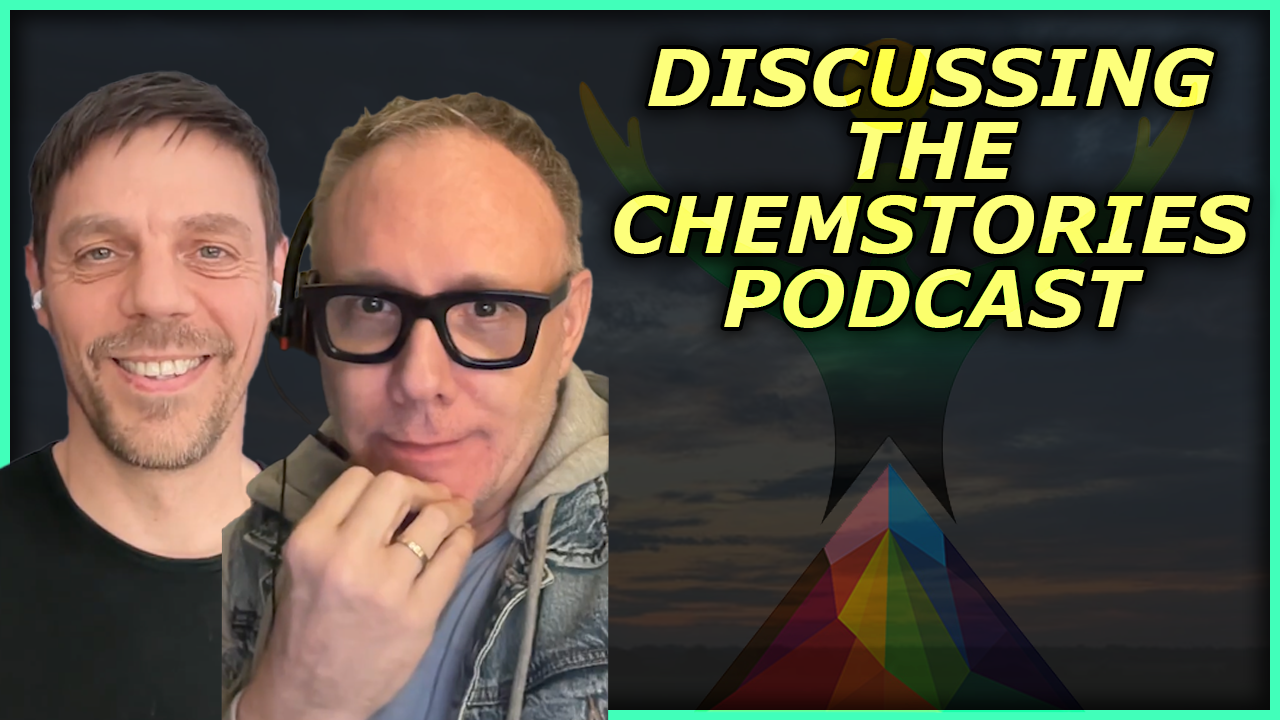
Patrice St-Amour is the research coordinator of Chem Stories, a bilingual (English and French) podcast series produced through Collab, directed by Professor Olivier Ferlat at the School of Public Health of the University of Montreal. Patrice holds a bachelor's degree in sexology from the University of Quebec in Montreal and brings his own lived experience with chemsex to his professional work. He first encountered chemsex as an early adopter in the early 2000s, and after navigating his own relationship with use, turned toward research and community storytelling as a way to understand — and serve — the people living these experiences. He has coordinated the Chem Stories project since 2023.
Bradley Hampton Wallace (he/him) is the Toronto host of Chem Stories and a master of social work candidate at the University of Victoria, where his research focuses on practices of care among men who engage in consensual chemsex. His work is grounded in a queer ethics of care, attending to how knowledge and community take shape through lived experience. Bradley brings his own experience as a person who uses drugs to his hosting and research, and is known for creating conversation spaces marked by genuine curiosity and non-judgment.
Theme 1: Storytelling as Harm Reduction
One of the most powerful ideas in this conversation is deceptively simple: when people tell their own stories, something shifts — in them, and in the people listening.
Patrice and Bradley didn't set out to create a clinical intervention. They set out to give gay, bisexual, and queer men the tools, training, and space to produce their own podcast episodes about their chemsex experiences. And what happened? Participants reported feeling freed. Freed from shame. Freed from the weight of secrecy. Freed into a sense of worth they hadn't felt before.
This is harm reduction in its truest form. Not just needle exchanges and drug checking — though those matter — but the radical act of saying, your story matters, your voice belongs here, and you are not required to keep this hidden to be worthy of care.
Patrice describes participants who took up to a year and a half to finish their episodes. Not because they were struggling to find words, but because the process of articulating their experience was itself meaningful — and sometimes painful — work. That's not a flaw in the methodology. That is the methodology. The podcast becomes a container for integration.
For those of us in the chemsex recovery space, this is a reminder that healing doesn't always look like a 12-step meeting or a coaching session. Sometimes it looks like sitting with a microphone and finally telling the truth.
Theme 2: Stigma, the "Good Gay," and the Hierarchies We Build
Let me say something plainly: our community eats its own when it comes to chemsex.
Bradley named it clearly in this episode — there's a hierarchy of acceptable drug use even within the gay community. MDMA at a club? That's fine. Smoking meth from a pipe? Suddenly you're a cautionary tale. And if you slam? Don't even show up. We draw these lines based on the gear, as Bradley puts it, as if the method of ingestion determines your moral worth.
This is the "good gay" and the "bad gay" dynamic playing out in real time. And it mirrors the exact same hetero-normative moral policing that has been used against us as a community for decades. We absorbed the shame, and then we redistributed it to each other.
Patrice makes an important observation here: when we make the drug the problem, we don't have to talk about oppression. We don't have to talk about why chemsex spread so rapidly in a community that has been systematically excluded, rejected, and shamed. We don't have to reckon with the fact that for a lot of men, the chemsex circuit offered the first place they ever felt truly accepted.
I know that was true for me. When I was early in my recovery and trying to build a gay friend group, it was hard. The social gatekeeping, the hierarchies of attractiveness and status — no wonder chemsex communities feel like coming home. The acceptance is instant. The judgment is absent. And that's not nothing. Understanding why that was appealing is not the same as endorsing it. It's just the truth.
Dismantling stigma — both external and internal — is part of the recovery work for many of the men I coach. And it starts with being honest about where the stigma lives and who taught it to us.
Theme 3: Meaning-Making and the Value of Lived Experience in Research
Bradley introduced a concept in this episode that genuinely gave me a new lens for my own work: meaning-making.
The Chem Stories podcast operates on the principle that when you hear someone else's unmediated story — not a clinician's summary, not a researcher's interpretation, not a chart — you get to make your own meaning from it. You bring yourself to the story. You find yourself in it. And that process of finding yourself in someone else's truth is one of the most quietly powerful things a human being can do.
This is why I keep saying: share your story. Not because trauma is content, but because your experience — the specific, embarrassing, complicated, joyful, terrible particulars of it — might be the exact thing that frees someone else from carrying theirs alone.
Bradley also points to something important about research that centers lived experience: it humanizes drug users. Research that treats people as data points, as pathologies to be studied from a safe distance, reinforces the very stigma it claims to be investigating. Community-based participatory research — the kind that trains people to produce their own stories, that includes them in the editorial process, that asks what do you want to say? rather than what do you confirm for my hypothesis? — does something different. It says: you are the expert on your own life.
For men navigating chemsex recovery, this matters. The dominant narrative about who you are and what your use meant is not yours to own. You get to make your own meaning from it.
Theme 4: Sexual Reintegration After Chemsex
This is the topic I hear about more than almost anything else, and it came up organically in this conversation.
There are men out there — many of them — who have been chemsex-free for ten, fifteen years and have not had sex since. They became convinced somewhere along the way that sex without substances isn't possible for them. That it won't be good enough. That they're fundamentally broken in this area. And so they abstain. From drugs, yes. But also from intimacy.
Patrice, who has been chemsex-free since 2012, gently pushes back on this. He's had sex. He's found connection. He's found joy. Not the same as Tina sex — he's clear about that. But something real and worth having.
I often point men to this idea: chemsex-free sex isn't a lesser version of something you lost. It's a new continent. The landscape is different. The weather is different. But if what you're ultimately seeking is connection — and I believe that's what most of us are really after — connection is available. It doesn't require substances to be real.
What does require attention is the fear. The belief systems men have absorbed about their sexuality, their bodies, their desirability without the chemical armor. Those beliefs didn't come from nowhere, and they won't dissolve on their own. That's where coaching, therapy, community, and honest conversation come in.
If you are frozen around sex right now, I want you to hear this: that is not your permanent state. It is a chapter, not the whole story.
Theme 5: Community as Medicine
If there's one thread that runs through everything Patrice and Bradley shared, it's this: community heals.
Not community as an abstract concept — community as the actual experience of sitting with other people who know what you've been through, who don't require you to explain yourself or apologize for yourself, who make space for the full texture of your story.
Bradley talked about the podcast club he's forming in Toronto — men living with HIV gathering to listen to Chem Stories episodes together and lead discussions. Not a book club. A podcast club. A room where lived experience is the curriculum.
I think about my own recovery. The people who got me through it weren't who I expected. They were a group of middle-aged hippie women. Not the gay community I was trying to build my way into at the time — but people who offered curiosity and acceptance without conditions. That was the medicine. Not the credential behind someone's name. The quality of presence they brought.
For men in chemsex recovery, building community is not a nice-to-have. It is a clinical need. Isolation is one of the most dangerous conditions for someone navigating this. And the right community — one that doesn't require you to perform wellness, doesn't rank your recovery, doesn't make you feel like the "bad gay" in the room — can be the difference between staying stuck and moving forward.
You deserve that kind of community. If you don't have it yet, keep looking. It exists.
Closing Reflection
What Patrice and Bradley are building with Chem Stories is, at its heart, an act of love toward a community that has too often been spoken about rather than spoken with. Every episode they release is a reminder that gay, bisexual, and queer men's experiences with chemsex are complex, layered, and deeply human — and that the path forward isn't shame. It's story.
I hope this episode loosens something in you. Whether you're chemsex-free and working on what comes next, or still in the thick of it and just looking for a place where someone tells the truth without judging you — I hope you heard yourself in this conversation somewhere.
That's the whole point.
Love you. Dallas 💚
Reflective Questions
-
When you think about your own chemsex story, whose voice do you use to tell it — your own, or one shaped by what others have told you it means?
-
Where do you notice yourself participating in hierarchies of "acceptable" or "less acceptable" drug use — either judging others or internalizing judgment about yourself?
-
What would it mean for you to tell your chemsex story — even just to one trusted person — without framing it as a cautionary tale or a confession?
-
If you are currently navigating life chemsex-free, what beliefs about sex and intimacy are you still carrying from your chemsex experience? Are those beliefs yours, or did you absorb them from somewhere else?
-
What does community actually look and feel like for you right now — and is there a gap between the community you have and the kind of presence and acceptance you genuinely need?
Journal Prompts
-
Write about a moment in your chemsex experience that you've never told anyone — not because it was necessarily the worst thing that happened, but because you didn't think anyone would understand it without judging you.
-
Describe the first time you felt truly accepted — with no conditions, no performance required. Who was there? What did that feel like in your body? What does that experience tell you about what you need in community now?
-
Patrice describes chemsex-free sex as a "new continent" — different landscape, different weather, but worth exploring. Write about what you imagine that continent might look like for you. What would you need to feel safe enough to step onto it?
-
Reflect on a part of your chemsex history that you've been judging harshly. What would it look like to hold that part of your story with curiosity instead of condemnation? What might it have been trying to give you?
-
Bradley talks about the "worth" that settles in when you tell your story and someone connects with it. Write the story you most wish someone had heard from you during your chemsex years — and then write what you'd want them to say back.
Action Exercises
-
Find one episode of Chem Stories. Visit chemstories.ca and listen to one episode — ideally one that feels slightly outside your comfort zone (an active user's perspective if you're in recovery, or a recovery story if you're still using). Notice where you find yourself. Notice where you feel resistance. Sit with both.Identify one belief you hold about chemsex-free sex or intimacy that you've never examined closely. Write it down. Then ask yourself: where did this belief come from? Is it based on your actual experience, or on something you were told, something you feared, or something you absorbed from the culture around you?
-
Practice telling a true piece of your story — out loud, to one person you trust, without softening it into something more palatable. It doesn't have to be the whole story. One true thing. Notice what happens to you when you say it, and notice what happens in the relationship.
-
Audit your community. Make a short, honest list of the people in your life right now. Next to each name, write one word that describes how you feel in their presence. Then ask yourself: do I have even one person on this list with whom I feel genuinely unjudged? If not, what's one small step toward finding that?
-
Write yourself a message the way Bradley's podcast participants did — as if you're producing your own episode of Chem Stories. What would the theme be? What's the part of your experience that the world needs to hear, not as a warning, but as a story? You don't have to share it. Just write it. Let it exist.
Responses