Content Warning
This episode and study guide contain candid discussion of childhood sexual exploitation, early drug exposure involving a minor, IV drug use, HIV diagnosis, untreated STIs, schizoaffective symptoms, and a relapse experience. Please engage at your own pace and prioritize your wellbeing. If anything stirs something difficult, that's okay — sit with it, or reach out for support.
A Note from Dallas
I've said it before and I'll say it again — HIV does not get talked about enough on this podcast, and that stops now.
Jose found me on Instagram and I am so grateful he did. When I heard his story, I heard echoes of my own. I know what it is to carry the weight of an HIV diagnosis alongside the shame of chemsex, alongside the shame of being gay, alongside the shame of meth — that layered, suffocating pile of stigma that makes you feel like damaged goods before you've even walked through a treatment center door. I've been there. And I know that the way out is not silence. The way out is exactly what Jose is doing: speaking the truth out loud, again and again, until it loses its power to destroy you.
Jose's story begins in adolescence — searching for love, for belonging, for someone to just see him — and it winds through some very dark places before landing somewhere remarkable. Today he is a year-three HIV spokesperson with the HIVStopsWithMe campaign, in recovery, and still becoming. His honesty in this conversation is a gift, and I hope you receive it as one.
You are not damaged goods. You are not your diagnosis. You are not your worst moment in a motel room. You are still here, and that means something.
Love you. — Dallas 💚
About Jose Barrientos
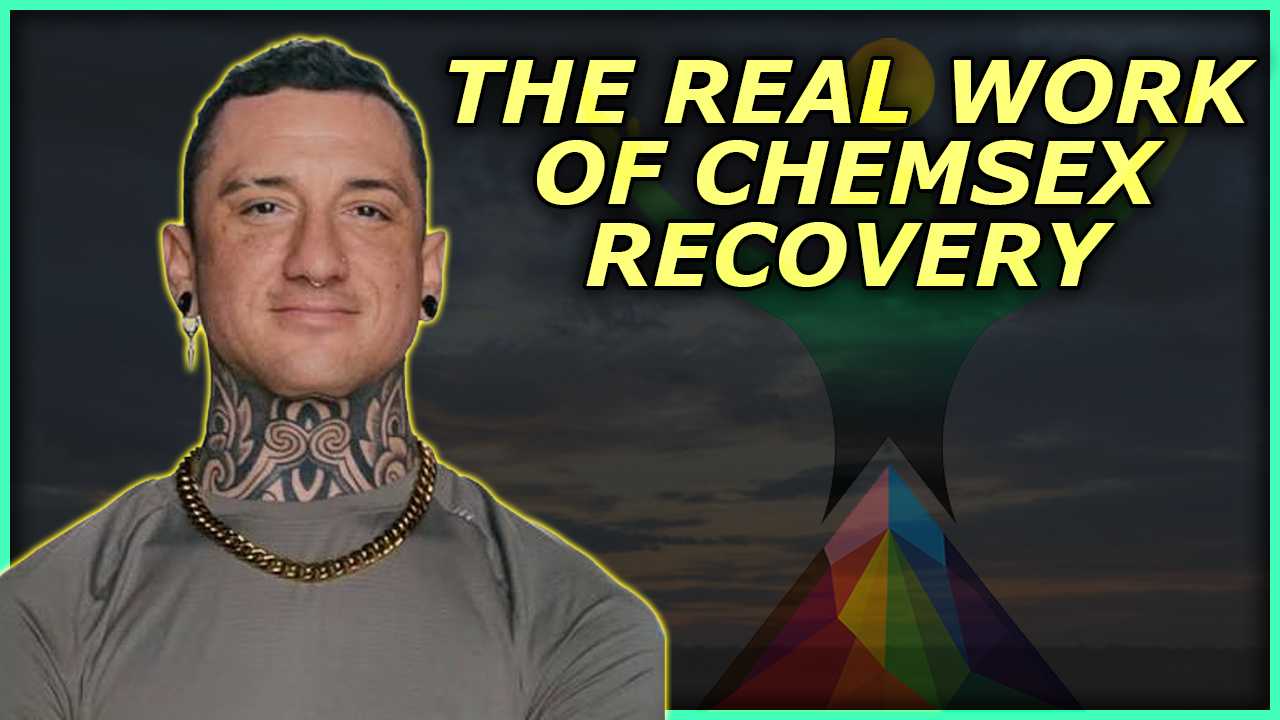
Jose Barrientos is a thirty-three-year-old queer Latino man, born and raised in Los Angeles and now living in Queens, New York. He has been living with HIV since his mid-teens and has walked a recovery path that includes early chemsex exposure, IV drug use, a treatment center stay at Cedar House in Bloomington, California, and years of building a life through 12-step community. He is currently a year-three spokesperson for the HIVStopsWithMe campaign, a platform dedicated to reducing HIV stigma through the real, unscripted stories of people living with the virus. Jose is also a sponsor in his recovery community, and he is actively engaged in inner child healing work. You can find the HIVStopsWithMe campaign at hivstopswithme.org.
Section 1: When Searching for Love Looks Like Danger
Jose grew up in a single-parent household, hungry for validation and identification — particularly from men. That hunger is something many of us in this community understand deeply. When the love and mentorship we needed wasn't available at home, we went looking for it in other places. For Jose, that meant the internet at fourteen, anonymous encounters, and older men who mistook his boldness for consent.
What's important to understand here is that his entry into both sex and substances happened not out of recklessness, but out of an aching need to feel grown, to feel chosen, to feel like somebody wanted him. Chemsex, for so many of the men who end up in it, begins as a misguided answer to an emotional question. Jose didn't go looking for crystal meth — he went looking for a man who would make him feel something real, and the drug came along for the ride.
This is the work of recovery: learning to trace the emotional root beneath the using. When we understand why we reached for what we reached for, we stop punishing ourselves for it — and we start making different choices from a different place.
Section 2: HIV, Stigma, and the Myth of "Clean"
Jose seroconverted — converted from HIV-negative to HIV-positive — around the age of fifteen, though he didn't receive his formal diagnosis until 2010. By then, untreated HIV wasn't the only thing he was managing. He was also navigating untreated STIs, IV drug use, and a mental health system that wasn't built for someone like him.
What strikes me about Jose's experience — and what I want every man listening to hear clearly — is how stigma compounded every single layer of his story. The shame of being gay. The shame of meth. The shame of the diagnosis. And then, years later, still being asked on apps whether he's "clean."
Let's be very direct: "Are you clean?" is not a health question. It is a shame question dressed up as a safety question. And here is the actual safety truth: an HIV-positive person who is undetectable — meaning their viral load is suppressed through medication — cannot transmit the virus sexually. Undetectable equals untransmittable. U=U. The man who tells you he's "clean" and goes raw with strangers is a far greater risk than the man who knows his status, takes his medication, and tells you the truth.
Jose's story invites us to educate ourselves, to dismantle the stigma we've internalized, and to make decisions based on knowledge rather than fear.
Section 3: Treatment Wasn't Built for Us — But That Doesn't Mean Recovery Isn't
At twenty-one, Jose ended up in the hospital, his body finally demanding that someone pay attention. A nurse — direct, compassionate, and maybe seeing her own son in his face — told him plainly what the chart said and pointed him toward help. He went to Cedar House, a treatment center in Bloomington, California. He stayed forty days.
It didn't go well. He was placed with predominantly straight men, none of whom had any experience with chemsex, none of whom could hold the particular shame of being a queer man with HIV in a room full of people who used completely different drugs in completely different contexts. He left. And for a long time, he carried that as a personal failure.
It wasn't a personal failure. It was a system failure.
I want anyone listening who has had a bad treatment experience to hear this: one bad door does not mean every door is closed. There are treatment centers in the US now that specialize in chemsex — No Matter What Recovery and Breathe Recovery, both in Los Angeles, are two I'll link in the show notes. The system is imperfect. That is a fact. But it is not a verdict on you or your recovery.
Section 4: Community as the Medicine
What finally anchored Jose wasn't a perfect treatment center or a flawless program. It was people. Specifically, it was the experience of being in a room — in 12-step community — with other humans who understood what it felt like to lose themselves and slowly, imperfectly, find their way back.
He talks about his sponsor being just another person with a drug problem — human, flawed, someone he doesn't always agree with. And somehow, that realness is exactly what works. Recovery doesn't ask us to find a perfect guide. It asks us to stop walking alone.
Jose also speaks beautifully about the tension between community and self-preservation. Knowing when you need people, and knowing when you need to be alone to absorb what's changing in you — that discernment is itself a recovery skill. Neither constant isolation nor constant immersion serves the work. Both have their season.
For those of us who used chemsex partly to feel connected — to manufacture intimacy through substances — learning to seek and build real community is one of the most meaningful, and most challenging, pieces of the work.
Section 5: The Inner Child and Living Out Loud
Jose closes this conversation in a place I find genuinely moving: talking about inner child work. About looking in the mirror and letting the younger version of himself — the fourteen-year-old on Craigslist, the fifteen-year-old seroconverting without knowing it, the twenty-one-year-old in the hospital — look back at the life that exists now. And see that it got better. That the struggle, as brutal as it was, shaped something real.
He is now a year-three spokesperson for HIVStopsWithMe, a campaign that invites people living with HIV to tell their true stories without a script, without performance, without apology. Every month, spokespeople record a video responding to a question of the month — about love, about status, about what life looks like when you stop hiding. The campaign is always looking for new voices. If you are living with HIV and you feel the pull, I encourage you to visit hivstopswithme.org.
Living out loud is not just advocacy. It is its own form of recovery. Every time Jose tells his story, that fourteen-year-old boy gets a little more of his dignity back. That is the work. That is what we are all doing here, together.
Closing Reflection
Jose's story is a reminder that the road into chemsex often begins long before the first hit — in the unmet needs of childhood, in the search for belonging, in the absence of someone who could show us what safe love looks like. And the road out is rarely clean or linear. It winds through hospitals, difficult treatment experiences, relapses in motels, and eventually, if we're lucky, into rooms full of people who have been somewhere similar and are still showing up.
You do not have to have it figured out to begin. You just have to take one step. If that step is listening to this episode, you've already taken it.
Reflective Questions
- When you think about what first drew you into chemsex, what emotional need was underneath it? What were you actually searching for?
- Have you ever internalized the language of "clean" — either applying it to others or to yourself? How has that framing shaped how you see your own worth?
- Jose describes feeling more isolated in treatment than before he arrived. Have you ever sought help and felt like the help wasn't built for you? What did you do with that experience?
- Who in your life right now functions as a witness to your recovery — someone who sees both where you've been and where you're going?
- If your younger self could see your life today, what do you think he would feel?
Journal Prompts
- Write about the first time you used substances in a sexual context. What were you hoping to feel? What were you hoping to escape? How do you hold that memory today?
- Describe your relationship with your HIV status, or with the fear of HIV. What emotions come up? Where do you carry those in your body?
- Jose says that what he really wanted, underneath all of it, was someone to love him and show him the right way. Write a letter from your current self to your younger self, offering exactly that.
- Think about a time you were told — explicitly or implicitly — that you were "too much," "damaged," or beyond help. Write back to that message. What do you know now that you didn't know then?
- What does "living out loud" mean for you in your recovery? What would you share if you weren't afraid of the response?
Action Exercises
- Learn U=U. Research the Undetectable = Untransmittable framework and write down three ways this information shifts your understanding of HIV risk, stigma, or your own sexual health choices.
- Audit your language. For the next week, notice when you use — or hear — words like "clean," "disease-free," or "healthy" as proxies for HIV-negative status. Practice replacing those terms with accurate, non-stigmatizing language.
- Find a door that fits. If you've had a bad experience with treatment, a meeting, or a support group, identify one alternative resource — whether that's a chemsex-specific program, an LGBTQ+ affirming therapist, or an online community — and take one concrete step toward accessing it.
- Map your community. Draw or list the people in your life who offer genuine, non-transactional support. Identify one gap — a kind of support you need but don't currently have — and think about one place you might begin to find it.
- Write a message to your inner child. Set a timer for ten minutes and write without editing. Tell him what happened, what you survived, and what his life looks like now. You don't have to share it with anyone. Just let him hear it.

Responses