Content Warning
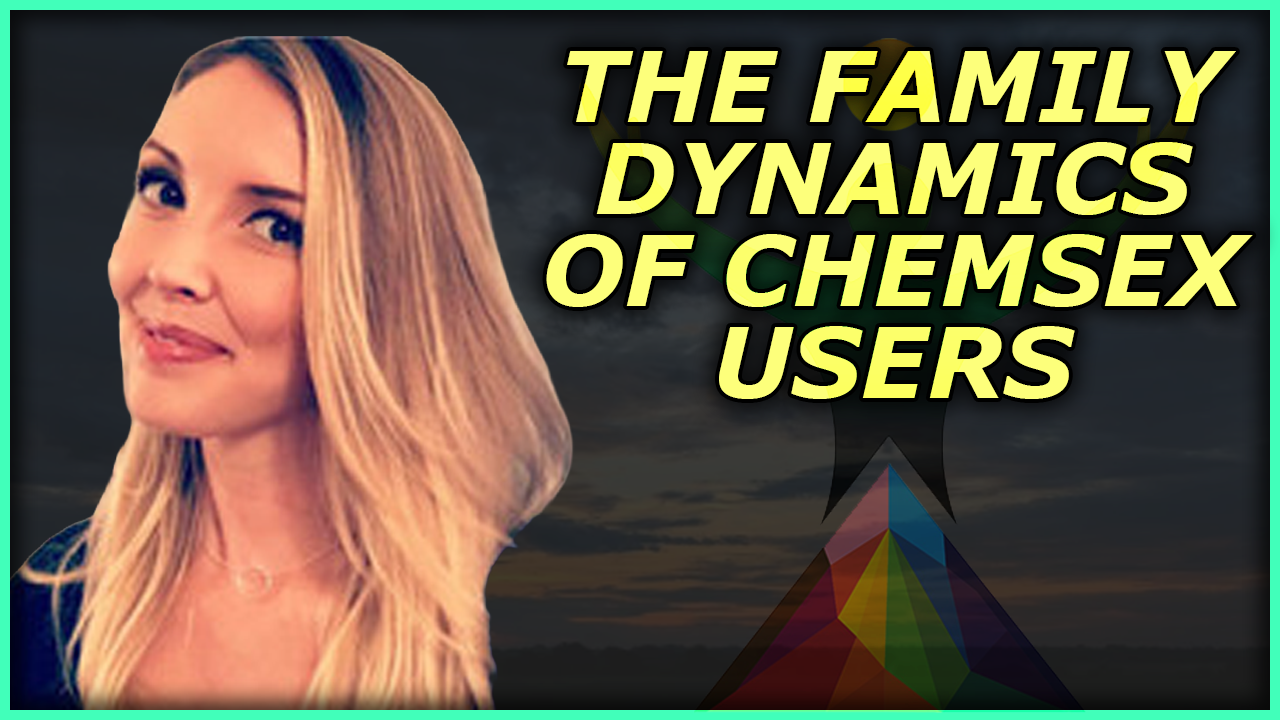
This episode and study guide discuss sexualized drug use (chemsex), substance use and dependency, sexual behavior, harm reduction practices, mental health, and references to childhood religious shame. The material may be triggering for some listeners. Please engage with it at your own pace, and pause or step away if you need to. Nothing here is medical advice.
A Personal Note from Dallas
Y'all, this conversation with Dom stayed with me long after we stopped recording. What I loved about it is how honest we were able to be about the fact that recovery doesn't look the same for everyone. Dom and I come at this from different angles — different relationships to substances, different stories — and yet we landed in so many of the same places about meeting people where they are, anchoring into your wins, and learning to trust yourself in the moment.
If you've ever felt like the only "right" way to do this is total, permanent, all-or-nothing abstinence, and that anything less means you've failed — I hope this one gives you some breathing room. There's a lot of nuance here, and nuance is where real healing happens.
Love you, Dallas 💚
Guest Bio
Dom (known professionally as "Dom Topics") is a London-based DJ whose life and career have been rooted in nightlife culture for years, both in London and internationally. Alongside his work behind the decks, Dom volunteers with Impulse, an organization focused on engaging, connecting, and supporting gay men globally across four pillars: substance use harm reduction, sexual health, mental health, and social justice. Over more than a decade with Impulse, he has moved into a global role overseeing chapters across several major cities, giving him a wide-angle view of how chemsex shows up — and is navigated — in very different parts of the world. Dom describes harm reduction as his passion project, and he brings a grounded, curious, non-judgmental perspective on why people use, and how they find their way to something different.
Section One: Harm Reduction as Meeting People Where They Are
One of the throughlines of this episode is a definition of harm reduction that has nothing to do with commanding anyone to stop. Dom frames it instead as meeting people exactly where they are — offering information, not ultimatums. The role, as he describes it, is closer to a signpost than a set of rules: not "you're using drugs, here's how to quit," and not "you're having sex, so you must always do X," but rather sharing balanced, honest information and trusting people to make their own decisions with it.
Both Dom and Dallas circle back to a familiar story: the older, more experienced person who hands someone a substance with no context — "just have this, you'll love it" — and no information about what it does or how to stay safe. That absence of information is exactly the gap harm reduction tries to close. The point isn't to moralize; it's to make sure that if someone is going to use, they at least understand what they're doing, why, and how to reduce the danger. As Dom puts it, gatekeeping information helps no one.
There's also a psychological insight worth sitting with here: when you tell someone flatly "don't do this," you can actually increase the pull toward it. A more balanced, informed conversation tends to invite genuine reflection in a way that a blanket prohibition never can.
Section Two: You Don't Lose Time — The Slip vs. the Relapse
A powerful reframe in this episode is the refusal to make people "start over from zero." Dom asks Dallas a question many listeners will recognize: at what point does a slip become a full relapse, and do you reset the count? Dallas's answer is that you are the executive of your own recovery, and that what matters is context — was this premeditated over weeks, with every safeguard quietly dismantled, or was it a sudden, unplanned moment?
More importantly, Dallas offers a way of measuring progress that doesn't erase everything at the first stumble. If you used twice in six months, compare that to the six months before, when you may have used fifty times. Stepping back to see that improvement — rather than collapsing into "I'm back to nothing, I ruined it all" — is what generates the fuel to keep going.
And then the line that anchors the whole section: you don't lose time. Time doesn't disappear. You don't get amnesia when you use. Whatever happened, you gained knowledge and experience from it — sometimes you have to have the hard stretch to learn precisely what you won't do again. Both host and guest name how much this contrasts with a shame-and-confession model, one that asks you to publicly rededicate yourself every time you fall short. That model, they agree, simply doesn't serve chemsex recovery.
Section Three: The Breakthrough Moment — One Action at a Time
The heart of this episode is a story Dom tells about a night that became a turning point. He describes being at an afters where, on paper, every marker of a "successful" party was in place — plenty of substances, plenty of people, nowhere to be the next day. And yet, a few hours in, he found himself wandering room to room, not really connecting with anyone, and something in him quietly said: this is done. You've milked it for all you can. This is where the line is.
What makes the moment instructive isn't the realization alone — it's what he did with it. Every part of his body was telling him to stay. Instead of trying to force a single heroic decision, he broke it into the smallest possible actions: just put your clothes on. Just pack your bag. Just order the car. Just get in. At each step his instinct still whispered that it felt wrong to leave — and he moved anyway, one action after another, until he was home.
Dallas names why this matters so much: so many of us keep trying to recreate a peak experience that already happened and won't come again — "milking a dry udder," as he puts it. The breakthrough is being able to stand in that room, even while high, and honestly say this is not what I want anymore, and then let action follow the feeling. One step, then the next, then the next. That sequence is a statement to your own subconscious: I'm done.
Section Four: The Buddy System and the Honest Check-In
Dom shares a practice from his earlier partying years that doubles as a genuinely useful recovery tool. He and a friend had a rule: whenever that little voice showed up asking "why am I here?", they'd look around the room. If you could honestly say "I'm here for the people," you could stay a while longer. If the honest answer was "I'm here for the drugs," it was time to go. And crucially — they promised not to talk each other out of it, but to leave together.
That combination of an honest internal check plus a trusted partner is the real mechanism. Dom describes how much he values having an "anchor" in any party environment — someone to check in with, giggle with, and stay tethered to as the night goes on. Both he and Dallas are candid that a buddy can cut the other way too; the wrong pairing can egg each other on into worse decisions. So the quality of the partnership matters: it has to be someone who genuinely has your back and shares the agreement.
This extends to returning to nightlife later on. When Dom eventually went back into clubs socially, what made it safe was going with someone who understood his situation, who wouldn't pressure him, and who was the same steady version of themselves whether high, drunk, or not using at all. A consistent, trustworthy anchor is what let him feel comfortable rather than overwhelmed.
Section Five: What Are You Actually Getting? Validation, Community, and the Long Game
Underneath the substances, this episode keeps returning to the deeper question: what is chemsex actually giving you? Dallas offers a sharp framing — what it's giving you is almost always what you're not giving yourself. If you keep going back for validation, the real work becomes asking how you might offer that validation to yourself, or find it in ways that don't involve chems.
Both men are careful not to demonize validation itself. Wanting to be desired, wanting eyes on you, wanting to feel like the most wanted person in the room — none of that is inherently bad. What makes the difference is intention. Seeking a short, sharp hit of feeling good while knowing exactly what it is can be very different from reaching for it to fill a void, to feel worth something, because you believe it's the only way. The same act can be healthy or harmful depending on what's driving it.
The episode also insists on honesty about how hard the early stretch is. Choosing to step away often means sitting with real discomfort, facing feelings that substances had quietly muted, and possibly loosening ties with people who were never quite the friends you needed. But isolation and community can work in tandem — you don't have to cut everyone off and go it completely alone. You can sit with yourself and reach out at the same time. Dom speaks movingly about rediscovering steady, long-standing friendships — including the women in his life who never judged him and quietly kept loving him from a distance. The bridges you think you burned, as he puts it, may still just need the fire pulled out of them. It's the long game, and the reward on the other side of pushing through the resistance is a deeper understanding of yourself — and, in time, more love for yourself.
Closing Reflection
If there's one thing to carry out of this episode, it might be this: you are the executive of your own recovery. There is no single roadmap that fits every person, and anyone who hands you one is missing how contextual and individual this really is. What you can do is get honest about what you're actually reaching for, build a small circle of people who truly have your back, and — in the moments that count — let action follow the feeling, one small step at a time.
Whatever stage you're in, your progress is real and it counts. Be patient with yourself, anchor into your wins, and keep reaching out.
For coaching, resources, and community, visit www.recoveryalchemy.org.
Five Reflective Questions
- When you picture the "markers of a good night" in your own life, what are they — and how often does the reality actually match the picture you're chasing?
- Where in your recovery do you tend to reset the count to zero after a slip? What would change if you measured progress against where you started instead?
- Think about a time your body was screaming "stay" while something quieter said "go." What did you listen to, and what did it cost or give you?
- When you reach for validation, what void is it filling? Is that a void something else in your life could fill?
- Who in your life has been steady and loving from a distance — a bridge you assumed was burned that might only need tending?
Five Journal Prompts
- Describe your own "breakthrough moment," real or imagined — the point where you knew, even in the middle of it, that this isn't what I want anymore. What did it feel like in your body?
- Write about what you've gained rather than lost from a hard stretch in your journey. What did it teach you that you couldn't have learned any other way?
- If you were going to write your own version of Dom's "look around the room" rule, what would your honest check-in question be?
- What are the everyday joys that make you feel like you don't need those environments — the small pleasures that quietly hold you? List as many as you can.
- Write a letter to a friendship you thought you'd lost. You don't have to send it — just say what you'd want them to know.
Five Action Exercises
- Build your "one action at a time" exit plan. Before you're in a high-pressure situation, write down the literal sequence of small steps you'd take to leave — clothes, bag, car, door. Keep it somewhere you can reach it in the moment.
- Identify your anchor. Name one person who could be your steady, consistent buddy — someone who's the same version of themselves regardless — and have the conversation with them about what you'd need.
- Run a wins inventory. Compare a recent stretch of time to an earlier one honestly. Write down the concrete improvement, however small, and read it back to yourself.
- Map your validation sources. List the ways you currently seek validation, then next to each, brainstorm one alternative way to meet that same need that doesn't involve chems.
- Reconnect with one steady person this week. Reach out to someone who has quietly shown you love and consistency — a message, a call, a coffee. Notice how it feels to be seen by them.

Responses