Content Warning: This episode carries more weight than most. The three guests speak openly about sexual assault (including being drugged), self-harm and a suicide attempt, drug-induced psychosis, an abusive relationship, homelessness, HIV, and dementia. This guide keeps the hardest details general, but the themes are still here. Please read it when you have the capacity, and consider going through it with your coach, therapist, or someone on your recovery team.
If you are in crisis or thinking about harming yourself, call or text 988 (Suicide and Crisis Lifeline, US) or Samaritans at 116 123 (UK and Ireland). For substance use support any time, call the SAMHSA National Helpline at 1-800-662-4357 (US). If you have experienced sexual assault, RAINN (1-800-656-4673, US) and Galop (0800 999 5428, UK, for LGBT+ people) offer confidential support. You do not have to carry any of this alone.
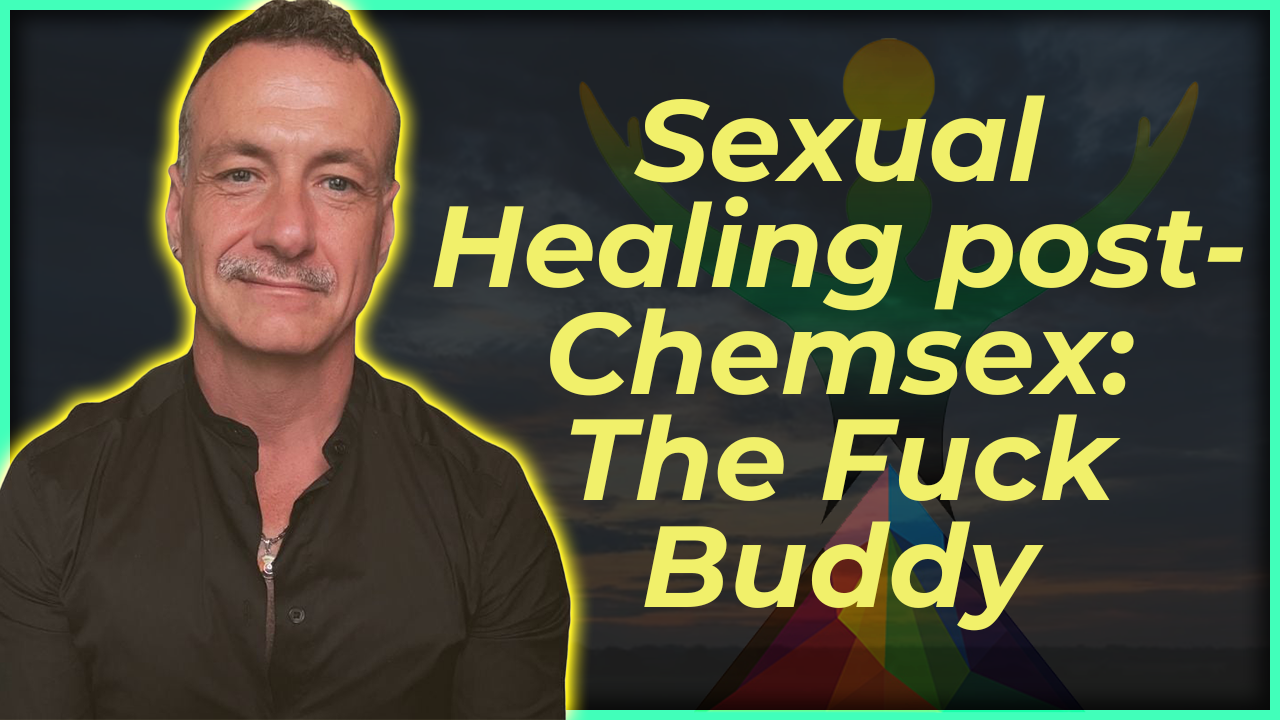
What This Episode Is About
This is a different kind of episode. Rather than a clinician or an author, Dallas Bragg hosts a panel of three people connected to the LGBT Foundation in the UK, each with a direct, lived relationship to chemsex. Dallas met Reece, the Foundation's sexual health coordinator, at the chemsex conference in Belgium, and the two of them put this panel together because the episodes that land hardest are the ones where someone who has actually been inside the scene tells the truth about it.
Hugh moved from Derry to Manchester knowing no one, and his crystal meth use spiraled into lost jobs, debt, homelessness, and temporary council housing alongside people with their own struggles. He has spent two and a half years finding himself again. Patrick, who also goes by Kitana, came to England from Barbados at 17, was diagnosed with HIV at 20, survived a severely abusive relationship that ended in a nervous breakdown and a rare early-onset dementia diagnosis, and used meth for years to block out what was happening to him. He went on to found the world's first LGBT dementia network and now works in recovery advocacy. Luke runs NeuroQueers, a community interest company for queer neurodivergent people, and describes a more sporadic relationship with crystal meth, cocaine, and poppers, alongside a longer battle with alcohol.
Together they cover sexual assault and the shame that keeps men from seeking help, what comes flooding back once the substance is gone, why therapy matters and why it can also be triggering, recovery as a neurodivergent person, sober sex, and what to actually say to someone who tells you they relapsed. Dallas lets them lead, and the result is raw, funny in places, and deeply hopeful.
Key Ideas to Sit With
1. The scene looks different depending on where you come from. Hugh describes the shift from a small Irish city, where everyone knows everyone, to Manchester, where a chemsex party in a hotel might be four strangers who will be on a flight to another country by morning. That anonymity is part of what made things darker. Patrick describes a London gay scene of the 1990s that was more community than chemsex, and how that changed.
2. Sexual assault while on chems is common, and silence makes it worse. Dallas names something he hears constantly: men who were assaulted while on G or meth and are ashamed to get help because they do not want to admit they were using, or they feel they deserved it. Hugh shares that he has been assaulted more than once, both sober and while drugged. One roommate's response was, "That's what you get." Hugh does not fully blame them, because watching someone in addiction is hard, but his point is clear: that is exactly the response that keeps men silent.
3. What helps: people who have been there. Hugh credits a support system of close friends who have had similar experiences. When you are not the only one, you stop asking "why me?" and stop carrying all the blame. He is honest that he is still healing and that some of his own numbness is not a model to follow, but talking about it with people who get it is what keeps him going.
4. Quitting the substance is sometimes the easy part. Dallas tells listeners this often, and Patrick's story is the proof. He used meth to block out an abusive partner, the voices he hears as part of his neurological condition, and years of unprocessed trauma. When he stopped, all of it came back. "The older you get, the harder it is to keep all those things in that closet."
5. You keep relapsing until you face the parts you are avoiding. A Carl Jung devotee, Patrick describes sitting alone for a month, forcing himself to think through everything his ex put him through, journaling every night, and letting the feelings come. It was terrifying, and it worked. He also says plainly that it is never fully over. He still has trust issues. He still relapses, three times since he started doing this work, because the work itself is triggering. But each time it gets easier and he learns more.
6. Therapy is non-negotiable, and it should come with a warning. Patrick has had a homophobic therapist who ignored his PTSD for six years, and he has had good ones who ask the one hard question that cracks something open. His conclusion: everyone on that panel has been to therapy, and it is the only way most people in this situation get through. Hugh agrees, adding that he has been fired by a therapist and has fired one himself. Keep looking until you find the right fit.
7. Masculinity, femininity, and the validation meth provides. Patrick describes becoming "super top" on meth, loving a side of his masculinity his father had forced on him and he had rejected, and getting validation from men who assumed a feminine person could not be dominant. Part of his recovery has been integrating both parts of himself, heels and all, and recognizing that someone else's discomfort with his femininity is their internalized homophobia, not his problem.
8. Recovery is different when you are neurodivergent. Luke, who has autism and ADHD, points out that everyone talks about ADHD and impulsivity, but autism is left out of the conversation. Autism is linked to routine and structure, so getting out of chemsex means breaking both the addiction and the routine of using. That is a double barrier. Neurodivergent people also feel certain emotions more intensely, including the ache of "what if I had done it differently," which can drive impulsive decisions in the first place.
9. "When I take it, my brain is quiet." Dallas raises something he hears from men with ADHD, BPD, and other conditions: meth is the only time their brain shuts off. Patrick, living with frontal lobe atrophy, says meth let him sit still, do paperwork, and function like he used to. He has had to learn to center himself and do those things without it, and he is clear that once use is for coping instead of fun, "if it outweighs the fun, it's no longer fun."
10. One size does not fit all. Luke found CBT's repetitive questions ("how many times did you feel this way this week?") overwhelming rather than helpful, and credits the LGBT Foundation for progress he could not have made in a mainstream service. He advocates for peer support, art therapy, music, and asking each person what their triggers are and what they need, rather than running everyone through the same script.
11. Replace the high. Luke's reframe: getting high is a human need, so find other ways. Music that lifts you up or brings you down, fantasy, feeling sexy, creativity. "It's all about replacement."
12. Sober sex: be honest with the person you are with. Luke misses how meth made him feel the first time, but has had plenty of sex since where he felt sexy, by focusing on quality over quantity, consent, and his own fantasies. Patrick's advice is to find someone you are comfortable with and tell them what you have been through. The jitteriness, the erectile issues, the anxiety: most of it is in your head, and verbalizing it makes it easier. Sex is a huge reason men relapse, and silence is what drives it.
13. Take responsibility, then forgive yourself. Patrick is blunt: "It's the drugs that made me? No. You are responsible for yourself." Recovery means facing what you did, the paranoia, the stealing, the harm, and being honest about it. And then boundaries, which he defines not as cutting people off but as forgiving yourself. The guilt that shows up after a relapse is a sign of self-awareness and progress.
14. What to say when someone tells you they relapsed. Luke's closing point. The reaction matters enormously. "Oh my God" and visible shock make a person want to disappear. Telling someone you relapsed is telling them something huge about yourself. Meet it with calm, with curiosity, and ideally with an understanding of that person's triggers and what helps them, agreed in advance.
15. You are not alone, and some of it you still do alone. Hugh's final word: speak to professionals, speak to family and friends if you have them, and if you do not, find the people who get it. Everyone's story is individual, and yet so many of them overlap. After you give up the drugs, everything comes back a hundredfold, and that is okay. You will get through it with the right support, but a lot of the internal healing is work only you can do.
Reflective Questions
- Has something happened to me while I was using that I have never told anyone because I was ashamed of being on drugs when it happened?
- What have I been numbing? Since I stopped (or since I last stopped), what has come back that I was not expecting?
- Where am I still deflecting? What is one thing from my using years I need to take responsibility for and then forgive myself for?
- If I am neurodivergent, what about standard recovery approaches has not worked for me, and what has?
- When someone tells me they relapsed, how do I react? How would I want someone to react to me?
Journal Prompts
- "The part of my story I have been too afraid to speak, write, or say out loud is..."
- "Meth gave me (focus, confidence, masculinity, quiet, validation)... and here is where I might find that without it..."
- "The parts of myself I cut off because partners, family, or the scene did not like them are... and this is what integrating them would look like..."
- "The routines and rituals of using that my body still misses are... and the routines I could build in their place are..."
- "If I were honest with a sexual partner about what I have been through and what I need, I would say..."
Action Exercises
- Tell one person. If there is something that happened while you were using that you have never shared, choose one safe person (a therapist, a coach, a peer support worker, a trusted friend) and tell them this week. Hugh and Patrick both say the silence is heavier than the telling.
- Audit your therapy. If you have a therapist, ask yourself honestly whether they understand chemsex, your sexuality, and your trauma. If not, it is okay to fire them and find one who does. If you do not have one, make one call to an LGBT-affirming service.
- Write your relapse response plan for others. Draft a short note for the people closest to you: what your triggers are, what helps when you slip, and what not to say. Share it before you need it.
- Build a replacement high. Make two playlists, one that lifts you and one that lets you come down. Add one more non-substance way to get euphoria (movement, creativity, fantasy, connection) and try it this week.
- Do the basics. Patrick's recovery started with a month of sleeping, eating, and napping. Pick one bodily basic you have been neglecting and commit to it for seven days.
Going Deeper
- LGBT Foundation. A UK charity providing sexual health, chemsex, and wellbeing support for LGBT+ people. lgbt.foundation
- NeuroQueers. Luke's community interest company for queer neurodivergent people. Contact details in the show notes.
- Patrick/Kitana Ettenes. HIV and dementia writer and advocate, founder of the world's first LGBT dementia network. Contact details in the show notes.
- Carl Jung on shadow work and integration. Patrick's guide through his last relapse. Start with any introduction to Jung's concept of the shadow.
- The Dopamine Nation by Anna Lembke (the book Patrick references on managing the body's response in recovery).
- Related AfterMeth episodes: The Moral Injury of Chemsex with Mell McCracken (on what we are shown in Zoom rooms and the injuries we carry), and the upcoming episode on Living With ADHD in Chemsex Recovery.
- Recovery Alchemy coaching. Learn more at www.recoveryalchemy.org.
Three people, three countries of origin, three completely different paths into chemsex, and the same three things on the way out: tell someone, face what you were numbing, and find the people who get it. Everything comes back when the drugs are gone. It comes back so you can finally heal it.
Love you!! Dallas 💚
© Recovery Alchemy, Inc. | www.recoveryalchemy.org

Responses