There are episodes I record that feel like I'm stepping into territory most people wouldn't touch with a ten-foot pole. This is one of them.
If you've spent any time in chemsex, you know what can happen in those rooms. You know what gets passed around on flash drives. You know what gets watched. And if you're now in recovery — or even just beginning to question your use — there's a good chance you are carrying something from those nights that you haven't told a single soul about.
Maybe you watched things that, sober, you can't believe you watched. Maybe something ended up on your device that you didn't put there, or maybe you did, and you're not sure how to live with that. Maybe you're somewhere in the middle — a legal situation, a charge, a conviction — and you feel like you've hit the absolute floor of who you thought you were.
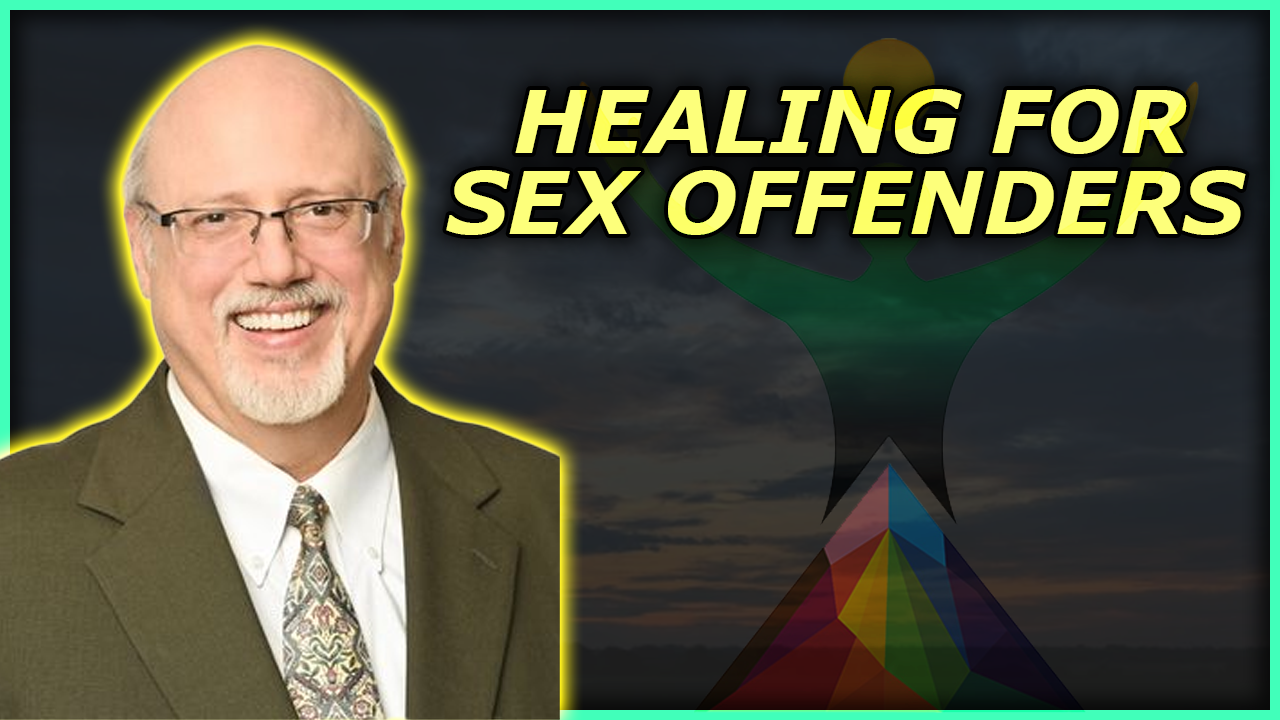
I brought Scott Stelerick on because this is exactly his world. Scott is a licensed master's level clinician with over 33 years of experience, including 26 years evaluating and treating sex offenders and extensive work in trauma, addiction, and corrections. He is the founder of Mosaic Pathway Counseling in Gurnee, Illinois. He does not flinch. He does not judge. And he has a lot of wisdom to offer.
This episode is not easy listening. But it might be some of the most important listening you do.
Love you. Dallas 💚
Scott Stelerick is a licensed master's level clinician based in northern Illinois with over three decades of experience working with some of the most challenging and underserved populations in the clinical world. He spent 26 years conducting sex offender evaluations and providing treatment, working alongside courts, state's attorneys, and public defenders to build a humane, accountability-based model of care. He also worked part-time in corrections for eight years early in his career. Today, Scott runs Mosaic Pathway Counseling, where his focus has shifted primarily to trauma-informed individual therapy. He is one of the few clinicians willing to do this work — and he believes that's exactly why it matters that someone does.
Let me be real with you for a moment.
Being a gay man in recovery from chemsex already means navigating layers of shame that most people never have to think about. There's the stigma of being queer. For many of us, there's HIV stigma on top of that. Then there's the shame of addiction — and not just any addiction, but crystal meth, which carries its own particular brand of social contempt. That's already a lot.
Now add to that the possibility that something happened during your using — something involving content you viewed, a situation you were implicated in, a charge, an arrest, a conviction — and the shame can feel like it has no floor.
Scott and I talked honestly about this layering. In corrections and in incarcerated settings, gay men and men with sex-related charges are at the bottom of a brutal social hierarchy. The legal system, the clinical system, and even the recovery community are not always equipped to hold these men with the care they deserve. Scott spent most of his career trying to change that — not because these situations are simple, but because if no one is willing to do the work, these men have nowhere to go.
If that's you, this episode was made with you in mind. You are seen here.
Understanding the Legal and Clinical Divide
One of the most clarifying things Scott said in this conversation is that the goals of a lawyer and the goals of a therapist are fundamentally different — and confusing the two can cause a lot of harm.
A lawyer's job is to protect you legally. A therapist's job is to help you heal. These two things are not the same, and sometimes they can pull in opposite directions. Scott is not asking you to confess to something you didn't do. He is not asking you to go against your legal counsel. What he is saying is that the clinical path forward — the one that actually leads to healing — requires a different kind of conversation than the one happening in a courtroom.
If you find yourself in a legal situation related to your chemsex use, whether that's a charge tied to content on a device, a situation you were present for, or something more direct — cooperation with the evaluation process is almost always viewed more favorably by courts than refusal. Scott described the evaluation not as a trap but as an opportunity to have your story heard by someone trained to compare it against the full picture.
He also talked about the use of polygraph testing in sex offender evaluations — not as an "I gotcha" mechanism, but as a tool that, when administered by someone trained in this specific population, can actually support your position if your account is truthful. He emphasized that evaluators who do this well give clients the questions in advance. It is not a surprise ambush.
The key reframe here is this: the evaluation is an opportunity, not a verdict. Engaging with it, rather than shutting it down out of fear, often leads to better outcomes — legally and personally.
Accountability Without Self-Destruction
One of the frameworks Scott returned to throughout our conversation was what he called the concentric circle model of accountability. Picture a bullseye. The outer rings represent smaller, more accessible areas of accountability — things you can more readily own. The center is total accountability for everything. The work doesn't require you to start at the center. It requires you to start somewhere.
For many of the men Scott has worked with, the most accessible entry point is the substance use itself. Most of us can say: I chose to use crystal meth. I chose to be in that environment. I let my guard down. I was not in control of my behavior. That's a starting point — and it's a meaningful one, even if it doesn't yet touch everything that happened.
What Scott found in his clinical work is that when people begin to own something — anything — accountability starts to build momentum. It becomes easier, not harder, to move inward toward deeper honesty. And that movement, however slow, is what produces actual healing.
There's also the matter of meth-induced psychosis. The super meth that's increasingly prevalent today creates neurological conditions that are genuinely different from ordinary intoxication. Your behavior under those conditions may have been completely outside your conscious will. Acknowledging that is not an excuse — it is part of honest accounting. The goal is to find the balance between "that was the drug, not me" and a more complete ownership of the choices that placed you in that situation.
Acceptance vs. Approval: A Critical Distinction
This was the part of the conversation I want every single one of you to sit with.
Some of you, during your using, experienced attraction to things that you do not want in your life — fantasies that appeared during chemsex that you've been trying to shove into a box and seal shut ever since. Maybe it was content involving minors. Maybe it involved non-consent. Maybe it was something you don't even have a name for. And now that part of you is sitting in the corner of your inner world, and you are either fighting it, running from it, or drowning in shame about its existence.
Scott made a distinction that I think is genuinely life-changing: acceptance is not the same as approval.
Accepting that a part of you has this urge or this history does not mean you are endorsing it, excusing it, or planning to act on it. It means you are willing to acknowledge its existence so that you can actually work with it — rather than expending all of your energy in a war against yourself that you are not going to win.
As Scott pointed out, every human being has urges toward things they should not do. Every single one. The difference is in what is socially acceptable to admit. The shame we carry around these particular urges is, in part, a product of how unspeakable they feel — which is exactly why they fester.
The invitation here is not to approve of that part of you. It is to say: this part exists. It is there. Fighting it blindly only gives it more power. The clinical path — the one that actually works — is to bring it into the room with a trained professional, name it, and build real structures around it. Not because you are proud of it, but because it is safer for you and for others when it is no longer living in the dark.
Scott also drew a parallel that I thought was quietly profound: he compared this to the experience of being closeted. A person who spends their life in a masquerade of who they are does not find peace that way. The path to integrity — in every sense of the word — runs through honesty, not suppression. The specific shapes of that honesty look different depending on whether something is clinically challenging versus legally prohibited. But the principle holds.
Finding a Specialist and Why it Matters
Scott was clear about something I want to underline: this work requires someone who knows what they are doing. Not every therapist is equipped to hold this material. Many are not. Some will react with alarm. Some will project their own discomfort. Some will simply not know how to help you progress without damaging you further.
Scott spent 26 years developing a model of care specifically for this population — and he noted that very few clinicians were willing to do that work. The ones who did, including Scott, had to figure out how to engage people who didn't want to be engaged, under time pressure, in adversarial conditions, while maintaining genuine clinical warmth.
If you are doing this work, you deserve someone in your corner who is trained for it. That may mean waiting. That may mean traveling. That may mean doing research to find someone whose credentials and approach actually match what you need.
My role as a coach is to help you get your head clear, build momentum, and prepare you for this kind of deeper therapeutic work. But the processing of moral injury at this level — the kind that involves legal complexity, trauma, and the most hidden parts of your sexuality — belongs in the hands of a specialist. Scott can make referrals. I can help you figure out next steps. Neither of us is going anywhere.
Finding a Specialist and Why it Matters
Here's what I keep coming back to after this conversation: the shame that lives in the dark is not protecting you. It is eating you.
You are a mosaic — that's the word Scott chose for the name of his practice, and I love it. You are not one moment. You are not your worst night. You are not the thing you watched or did or got charged with. You are a complex, multi-layered human being who got lost in a substance that hijacks the brain in ways that science is still trying to fully understand.
None of that erases accountability. None of that means you don't have work to do. But it does mean you are not beyond the reach of healing — not even close.
If this episode found you, I believe it found you for a reason. Take one step today. One.
Love you. Dallas 💚
Reflective Questions
Take some time to sit with these before moving on. There are no right answers — only honest ones.
- When you think about the things you did, watched, or were involved in during your chemsex use, what emotion comes up first — shame, fear, confusion, something else? What does that emotion tell you about where you are right now?
- Have you ever conflated accepting something about yourself with approving of it? Where else in your life has that confusion shown up — and what happened when you stopped fighting something and simply acknowledged it?
- Scott described the legal and clinical paths as fundamentally different. If you've been in a legal situation related to your use, have you been treating your healing like it's a courtroom strategy? What would it look like to separate those two things?
- What is the "smallest circle" of accountability you feel ready to step into right now — the thing you can most honestly own about how you got to where you are?
- Is there a part of you — a urge, a fantasy, a history — that has been living entirely in the dark? What has keeping it there cost you?
Journal Prompts
Give yourself at least 15 uninterrupted minutes with one of these. No editing, no judgment — just write.
- Write about the thing you haven't told anyone. You don't have to share this with a single person. But write it down, in your own words, as honestly as you can. What happened? What was your role? What do you believe it says about you — and is that belief actually true?
- Describe the version of yourself you are most ashamed of. Now write about that version of yourself the way Scott would — with curiosity, not condemnation. What was that person carrying? What were they running from? What did they need that they didn't know how to ask for?
- Think about the concept of acceptance without approval. Write about a part of yourself you've spent years trying to eliminate or deny. What has that fight cost you? What might change if you simply said: this part exists, and I'm going to work with it rather than against it?
- Scott talked about building structures around urges that cannot be acted on — the way a doctor's warning about coffee would cause you to build your life differently. Write about what your structures could look like. What boundaries, supports, or safeguards would help you live with integrity around your most challenging urges?
- Write a letter to the version of you that is most afraid to seek help. What does he need to hear? What would it take for him to take one step toward a therapist or specialist who could actually help?
Journal Prompts
These are concrete steps. Pick the one that feels most alive — or most uncomfortable — and start there.
- Name it to yourself first. Before you bring anything to another person, write a single honest sentence — just one — that names the thing you've been most afraid to say out loud. Put it on paper, seal it in an envelope if you need to. The point is to break the silence in your own inner world, even before any external disclosure.
- Research a specialist. Spend 30 minutes this week identifying at least one therapist with specific experience in trauma, sexual compulsivity, or sex offender treatment. You don't have to make an appointment yet. Just find a name and save their contact information. Scott can make referrals for those who reach out to him. I can help you think through what to look for. The research itself is a step.
- Map your concentric circles. Take out a piece of paper and draw three circles — one inside the other. In the outer ring, write the things about your behavior during your using that you feel most able to own right now. In the middle ring, write what sits just beyond that — the things you can almost own but not quite. Leave the center blank for now. This is your accountability map. Come back to it in therapy.
- Have one honest conversation. This week, say one true thing to one person — a sponsor, a coach, a trusted friend — that you've been holding alone. It doesn't have to be the whole story. It can be as simple as: "There's something from my using I haven't talked about and I think I need help with it." You don't owe anyone the details. But saying something out loud to a safe person is how the isolation begins to break.
- Practice the distinction. For one week, when you notice yourself fighting or suppressing a difficult thought or urge, pause and practice saying internally: "I accept that this thought exists. I do not approve of it, and I am not going to act on it." Notice what happens to the intensity of the urge when you stop wrestling with it and simply acknowledge it. Write down what you observe.
Continue and Connect
If this episode brought something up for you and you're not sure what to do next, I'm here. Start at drdallasbragg.com — that's where you can learn about coaching, find resources, and reach out directly.
Scott Stelerick can be reached through Mosaic Pathway Counseling for those in Illinois or Wisconsin, and he is willing to assist with referrals for those outside his licensure area.
You are not alone in this. Not even close.

Responses